The Story
Why it exists.
The beginning
Larrea is named for the creosote bush, Larrea tridentata, the plant that defines the Sonoran Desert's scent signature. When monsoon humidity climbs and rain finally arrives, the plant's waxy leaves release a sharp, resinous, almost medicinal aroma that locals recognize from miles away. It is one of those smells that doesn't exist outside that specific geography. Lesli Wood Peterson, the perfumer behind La Curie in Tucson, built Larrea around that atmospheric moment. The fragrance translates the creosote phenomenon into a wearable composition that doesn't just nod at desert flora. It commits to the wet-dust, dry-thunder character of an actual Arizona monsoon, the kind that rolls in fast and drops everything, leaving the air smelling like static and something faintly burnt.
What makes the composition distinctive is its restraint with the obvious cues. Rather than leaning into a straightforward herbal or green direction, the chaparral sits inside a smoky-leathery structure. The creosote's medicinal sharpness is cushioned by petrichor, that earthy smell of rain on parched ground, while leather and everlasting flower give the drydown a warm, slightly sweet depth. The accord list reads spicy, smoky, earthy, leathery, woody. The interesting move is how those categories overlap.
The evolution
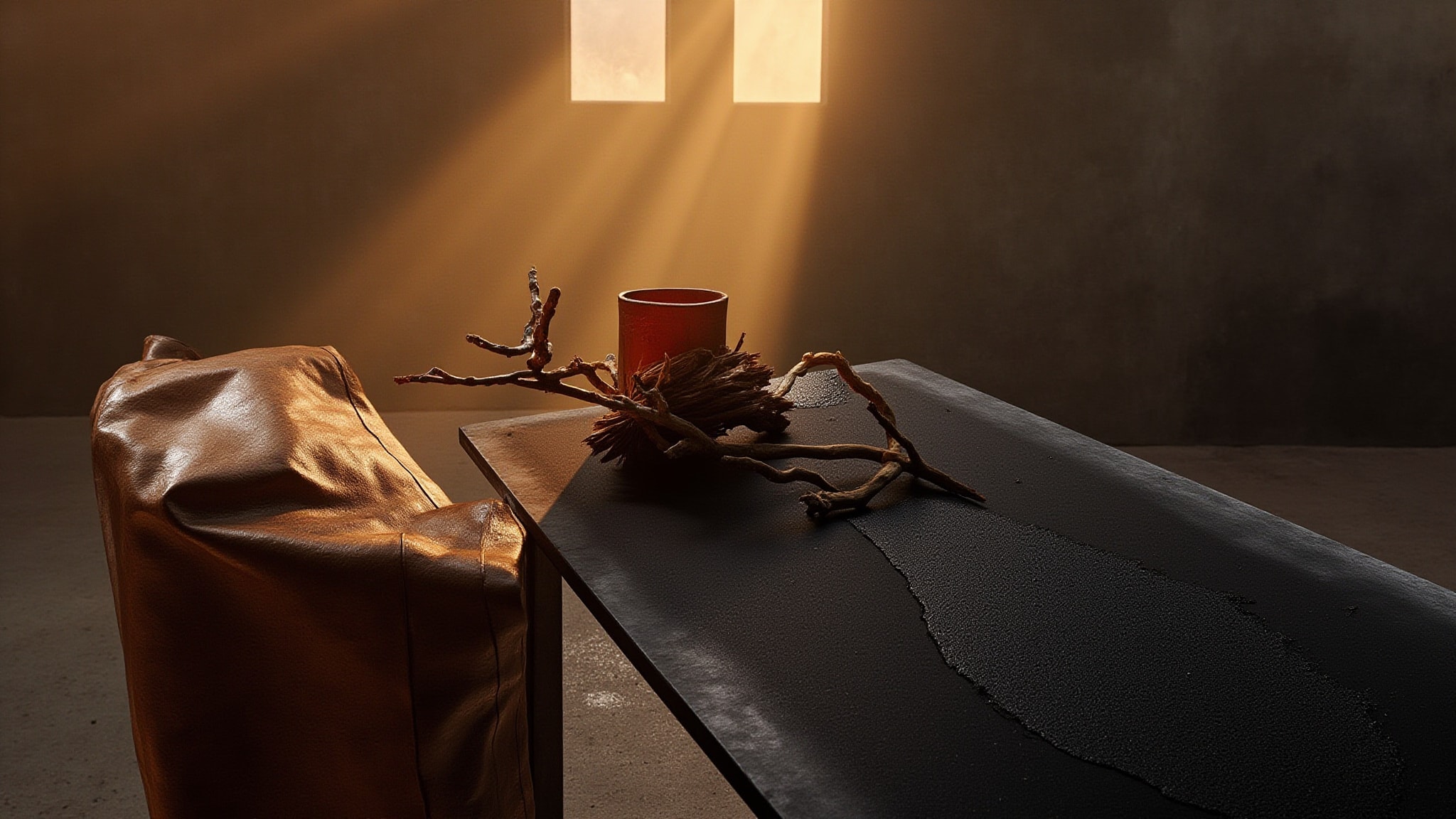
The opening is all weather. Chaparral and petrichor arrive together, sharp and almost metallic, like ozone before a thunderstorm breaks. There's a green sharpness here that some might read as harsh, but it's really the plant doing its thing, that resinous, almost antiseptic edge that creosote gives off when humidity triggers its volatile oils. Then the leather arrives, and the composition pivots. The sharp green top folds into something warmer, denser. Everlasting flower brings its cured, honeyed character, which gives the heart phase a sticky, almost sweet undertone. This is where Larrea stops being about weather and starts being about terrain. Dry washes. Sun-baked rock. Smoke drifting from somewhere unseen. As the hours pass, the smoke settles into a permanent hum underneath the leather.
Cultural impact
Larrea takes the American Southwest seriously as an olfactory territory. The composition goes after the actual monsoon moment, the wet creosote, the smoke, the cured-leather warmth of objects left in heat. That specificity, the sense that the fragrance was built around a real geographic phenomenon rather than a generalized idea of desert, sets it apart from compositions that treat arid landscapes as decorative backdrops. The scent reads as place-based perfumery in the strictest sense. Every note ties back to something you could encounter in the Sonoran Desert during a specific kind of weather event. The chaparral is creosote.