The Story
Why it exists.
The beginning
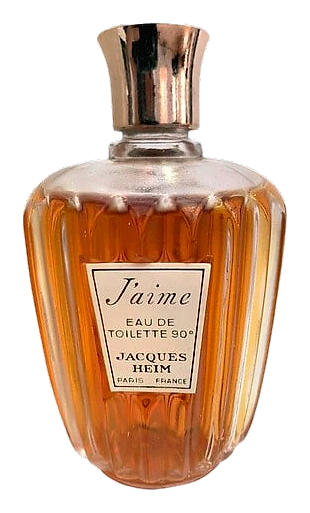
J'Aime was Jacques Heim translating his fashion philosophy into fragrance. The man who dressed women in clean lines and wearable elegance wanted the same for scent. Not occasion fragrance. Everyday. He founded his perfume house in 1949 and began composing J'Aime to capture that cool, green, timeless quality he loved in fashion. The aldehydes give it sparkle. The moss gives it soul. The leather gives it something to say.
Aldehydes are the signature of a certain kind of 1950s elegance. They catch light. They make florals feel lifted, almost weightless. Here, paired with moss and bergamot, they open the fragrance with that distinctive cool shimmer. The green heart is not the aggressive green of modern compositions. It's softer, more atmospheric. Think dewy morning air, not cut grass. And then there's leather. In a cologne concentration, that's unusual. It adds structure and a quiet sophistication that keeps the powdery softness from becoming precious.
The evolution
That champagne quality doesn't last, but it doesn't need to. The green heart unfolds next, florals and moss creating that cool, dewy atmosphere. The leather doesn't announce itself. It settles underneath, adding weight without heaviness. Oakmoss provides an earthy counterpoint to the powder and leather. Sandalwood and amber give it warmth. There's a hint of animalic in the base that keeps everything honest, grounded in skin rather than floating above it. The entire evolution is quiet, measured, and complete.
Cultural impact
J'Aime arrived in 1953, a moment when French fashion houses were expanding beyond couture into ready-to-wear and accessories. The house occupied a distinctive middle ground, bringing considered composition to a broader audience. Its aldehyde and oakmoss character places it in conversation with the great powdery florals of its era. But J'Aime's cool green quality and its quiet leather thread give it a character all its own.






