



Heritage
A house, in its own words
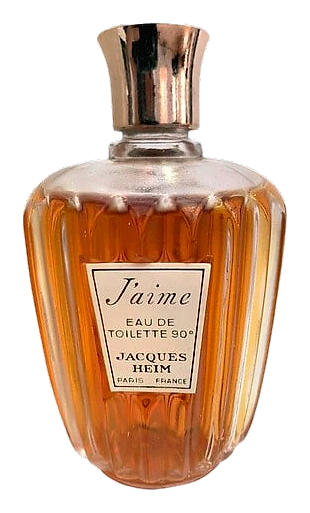
Jacques Heim was born in 1899 to Isidore and Jeanne Heim, Polish Jewish furriers who established their workshop in Paris in 1898. Young Jacques began working in the family fur business in the early 1920s and took over operations in 1923. Rather than confine himself to furs, he gradually expanded into ready-to-wear, adding a couture department that designed dresses and coats using original fabrics, collaborating with artist Sonia Delaunay. By 1930, the family workshop had transformed into the fashion house of Jacques Heim. The house introduced its Heim Jeunes Filles collection in 1936, targeting younger customers, and established sportswear boutiques in Biarritz and Cannes starting in 1937. Heim founded Parfums Jacques Heim in 1949 to broaden distribution of fragrances he had been creating for clients since around 1930. His standing in the industry was confirmed when he served as president of the Chambre Syndicale de la Couture Parisienne from 1958 to 1962, and he dressed Madame de Gaulle, wife of the French president. Jacques Heim died in Paris on January 8, 1967. The house closed in 1969, reportedly because it entered the perfume and cosmetics market too late to sustain the couture operation. Fashion historian Caroline Rennolds Milbank described Heim as an innovator in her 1985 book Couture: The Great Designers, noting his consistent sensitivity to market demands. Jacques Heim operated from a pragmatic conviction that good design should reach beyond the narrow circle of haute couture clients. His New York Times obituary noted that his fashion house designed clothes of a modest style, a description that captures both the aesthetic and the ambition. Rather than pursuing avant-garde provocation, Heim favored clean lines, wearable elegance, and fabrics that worked for real lives. This approach extended naturally to fragrance, where he composed scents meant for daily use rather than special occasions alone. Women's Wear Daily's obituary characterized him as basically an innovator in business, suggesting that his true talent lay in recognizing what customers wanted before they articulated it themselves. The perfumes bearing his name carried this philosophy into the beauty realm: approachable luxury that did not require aristocratic means to appreciate. Heim understood that the perfume market could sustain fashion houses that couture alone could not, since only a small percentage of consumers could purchase haute couture directly.