
The Story
Why it exists.
The beginning
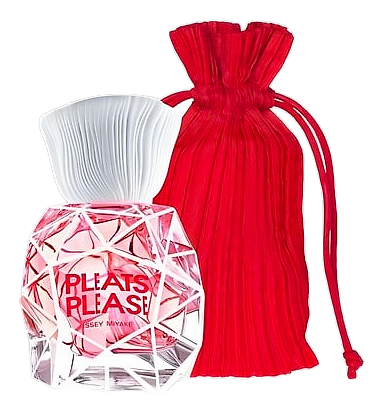
The Pleats Please collection began in 1993 as Miyake's answer to clothing that moved with the body, washable, portable, wrinkle-free. By 2012, the line had become its own language of shape and softness. The fragrance, composed by Aurélien Guichard, was built from the same premise: take something structured and make it fluid. The notes don't perform for a room. They settle against the skin like fabric against skin. Joy, color, vitality, those were the brief. Guichard delivered something quieter. More persistent.
Peony leads the composition, which is expected for a floral. What isn't expected is the sweet pea anchoring the heart. It's not a common material in perfumery, it reads differently on everyone, which is precisely why it works here. The white flowers amplify without overwhelming, and the cedar-patchouli-vanilla base keeps the whole thing grounded. This is a pyramid built for intimacy, not projection. Nothing wasted. Nothing left out. The structure mirrors the pleats themselves: layers that collapse into something flat and portable, yet unfold into something fuller than expected.
The evolution
The opening lasts about twenty minutes, peony bright, clean, almost crisp. Think of it as the moment you step outside and the air hits differently than expected. Then the sweet pea arrives, and this is where opinions split. On some skin it reads grape-adjacent, almost confectionary. On others it stays greener, more vegetable, a pod still on the stem. Either way, it keeps the florals from going predictable. The white flowers join by the hour mark, richening the middle without tipping into indolic territory. By hour three, the base takes over. Patchouli and cedar provide the structure. Vanilla keeps it warm. This is where the Pleats Please identity becomes clear, not dramatic, not disappear. Lasting. Close. The kind of drydown that someone notices when they're standing near you, not across the room.
Cultural impact
The Pleats Please EDP carved a specific space in the early-2010s floral market, neither the safe soapy-clean trend nor the heady white-floral maximalism that preceded it. It found an audience among wearers who wanted femininity without performance, interest without projection. The sweet pea note became its quiet differentiator, the reason people remembered it after trying dozens of similar florals. Worn by someone who finds power in restraint.