The Story
Why it exists.
The beginning
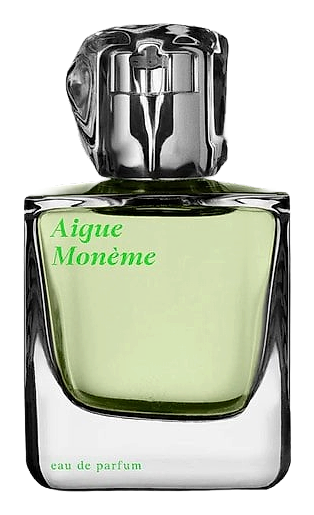
There is a moment where a riverbed settles into its own shape. Running water meets soil at an exact seam, and the two become something neither can claim. Aigue Monème is named for that equilibrium, that fragile threshold between flow and ground. Julie Barretta built IROISE around the idea that scent could capture weather and atmosphere as primary materials, not decoration. Aigue Monème reflects this philosophy in its makeup: water notes, green notes, chalk, and earth. Minimal on paper. Something else entirely on skin. The brand's official description calls it "light green chalk, freshwater and earthy matter." That's not a note breakdown. That's the whole picture.
Most aquatic fragrances build from the top with something bright, a marine accord or a citrus splash, then chase depth through woods and amber underneath. Aigue Monème flips the architecture. The water and green sit together as the surface, not as an opening that burns off. Chalk holds the structure, giving the composition a mineral backbone that reads almost geological rather than perfumistic. The earth underneath doesn't warm things up. It just grounds them. What makes the structure interesting is its refusal to escalate. There's no development arc in the traditional sense, no spicy heart or creamy base waiting to surprise you. The minimalism is the point.
The evolution
What arrives first is the chalk. A dry mineral hush, like dust off a cliff path. The water notes layer in quickly, not as a splash but as humidity, the air after rain on warm stone. Within the first ten minutes, the green emerges through the mineral surface: not bright, not grassy, but the muted vegetal tone of moss that's been wet for a while and is starting to think about drying out. There's no dramatic shift. The composition holds its shape for the first two hours, a steady state of mineral-aquatic-green that reads as a single sustained chord. Around the three-hour mark, the water notes start to recede, and the earthy base begins to assert itself. Not warm earth, not petrichor. Cooler. Closer to damp loam, the smell of soil just after you've turned it with a spade. The chalk stays present through this transition, anchoring the green as it fades. By hour four or five, the green is mostly gone. What remains is the earth-chalk dialogue, cool and dry and close to the skin. Sillage drops to an intimate radius.
Cultural impact
Aigue Monème offers a striking example of how contemporary indie perfumery can lean into place-based minimalism, building an entire composition around four elemental note families without any traditional perfumery scaffolding like citrus, woods, musk, or amber. The result is something that resists easy classification. It smells neither like a classic eau de cologne nor like a mainstream niche release. What's most notable is how wearers tend to describe it. Many frame it less as a perfume and more as an environmental impression, using language borrowed from landscape and weather rather than from traditional fragrance vocabulary.
The House
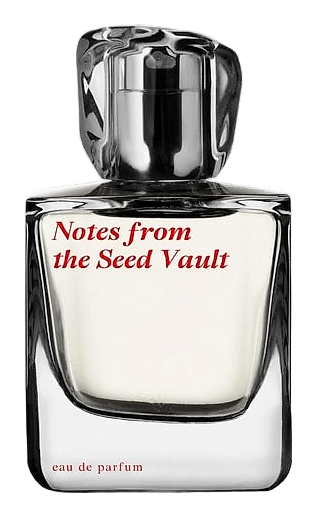
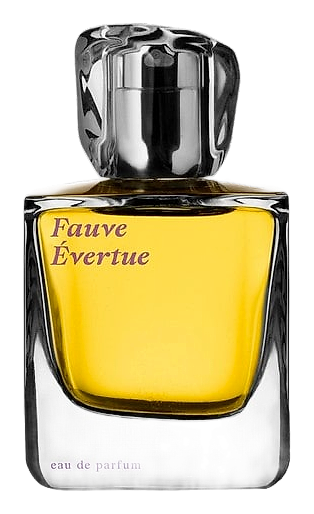
IROISEIROISE nouvelle parfumerie is an independent French fragrance house founded by Julie Barretta, working at the intersection of sensorial perfumery and atmospheric composition. The brand draws on elemental textures like water, moss, clay, vapour, foliage and skin to build fragrances that read less like traditional perfumes and more like lived experiences. Its debut collection introduced Aigue Monème and Fauve Évertue in 2023, followed by Notes from the Seed Vault in 2025, each shaped around a distinct natural or emotional landscape.
The Creator
Julie BarrettaBarretta writes in a restricted, atmospheric register, favoring compositions built around aqueous, vegetal, and mineral axes rather than dense oriental or gourmand structures. Water appears as both literal subject and conceptual through-line, treated through mosses, saline acc…