The Story
Why it exists.
The beginning
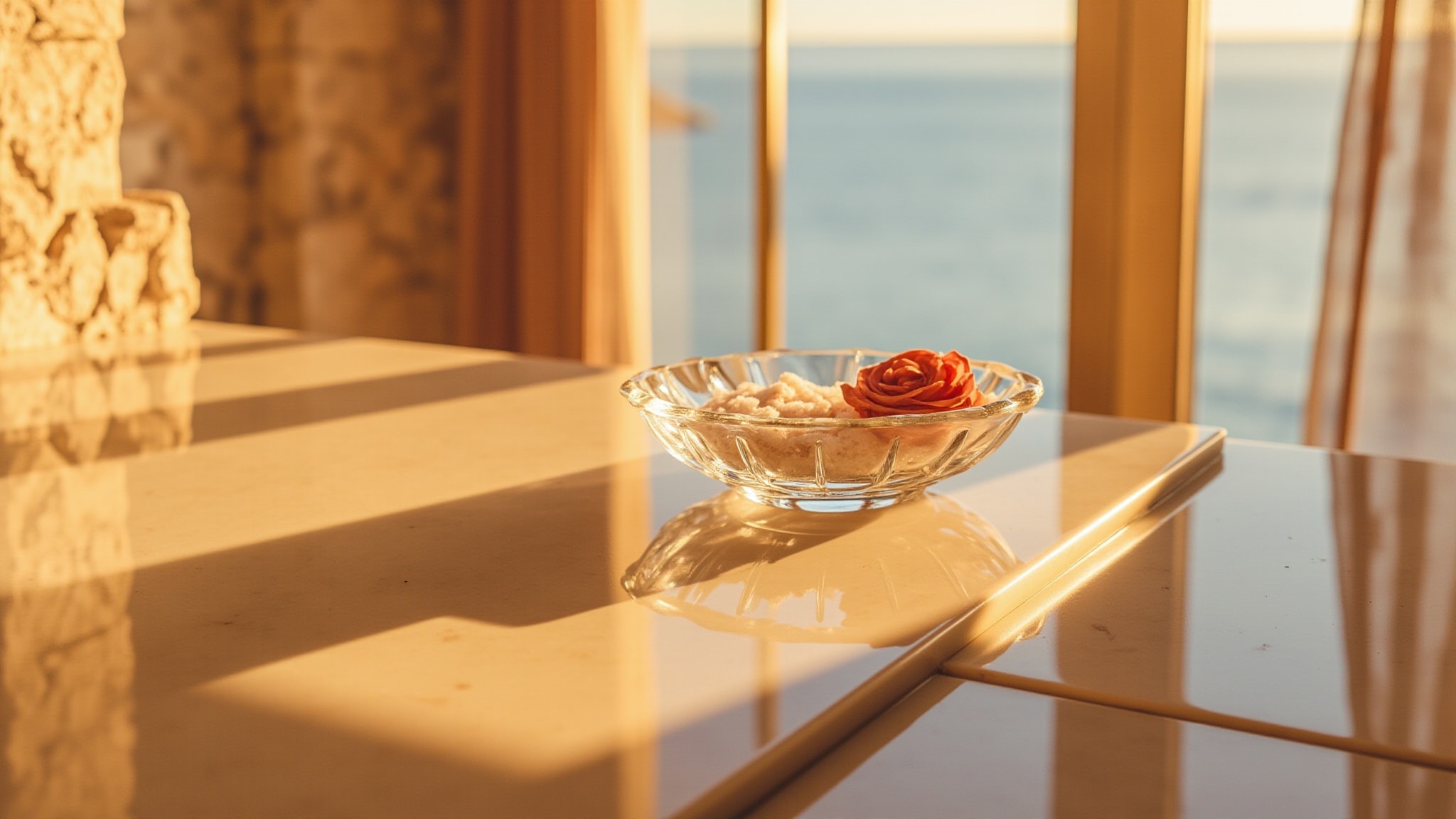
Marechiaro is a Neapolitan word. It means clear sea, the kind you see straight through on a windless morning, where the bottom stops being an idea and becomes visible. Sofia Bardelli chose the name because she was chasing a specific quality of light, not a category. Not another aquatic. Something that felt transparent without being thin, warm without being heavy. She built it as an Extrait, which tells you something about the intent. You don't make an Extrait when you want something to disappear. You make one when you want it to stay. So when the brief was coastal clarity translated into liquid form, she reached for salt not as a top note but as a structure, something that holds the opening together and keeps the florals from drifting off into nothing. Rose enters the conversation quietly. Sandalwood keeps it honest. Amberwood is the reason it still smells like something worth wearing at hour eight. The name came first. The composition followed.
The interesting decision in Marechiaro is the pairing of salt with amberwood. Salt is marine, it belongs to the opening, to the first hour, to the breeze you smell before you see the water. Amberwood is warmth, depth, the kind of note that usually stays close to the skin. Together they create something that doesn't behave like a typical aquatic. The salt doesn't evaporate. It integrates. It becomes part of the amber rather than standing in opposition to it. Rose does something similar, it keeps the florals from reading as decorative. There's sandalwood beneath it, which means the rose has somewhere to land. It doesn't hover. It settles.
The evolution
The opening hits with the expected marine. Salt and aquatic notes arrive together, the kind of clarity that makes you check whether the window is open. This is the first twenty minutes, and it's clean, not clean in the way that means nothing happened, but clean in the way that means everything is exactly where it should be. Then the florals arrive. Not a transition, an arrival. Rose and sandalwood emerge together, and for a stretch of time the composition holds both: marine freshness and something deeper, warmer. The sandalwood gives the rose texture instead of sweetness. This is the phase that changes your understanding of what you're wearing. The drydown is where the Extrait concentration proves itself. Amberwood and white amber wrap the earlier notes in warmth, but the salt doesn't fully disappear, it settles into the skin-warm quality rather than remaining airborne. Eight to ten hours on most skin types. On the second day, the fabric will still hold a trace: salt and amber, indistinguishable, worn in.
Cultural impact
Marechiaro sits in a specific corner of the niche market, fresh aquatics that refuse to be fleeting. The Extrait concentration puts it in a different category from the typical marine fragrance, which gives it staying power that changes how the genre is discussed. Where most aquatics are defined by their first hour, Marechiaro is built for the eighth. That shifts the conversation from freshness to permanence, and permanence is harder to achieve in marine compositions. The brand operates outside traditional luxury distribution, which means this kind of release reaches wearers who are actively looking rather than passively receiving.