
The Story
Why it exists.
The beginning
Tesseract features a combination of materials including Armenian cucumber and watermelon layered over seaweed and salt, with a base of moss and oud. The opening is cool and bright, presenting a freshness that feels precise. There's an immediate, watery quality to the start. As the fragrance develops, the bright top notes begin to fade, revealing marine and green elements underneath. Seaweed brings a briny, textured depth that adds complexity. The composition transitions smoothly into its darker register, where moss and oud take over. The oud is subtle, more mineral than smoky, providing warmth without heaviness. The overall effect balances freshness and depth, moving from cool, bright opening notes to a grounded, resinous base.
What makes this composition unusual is the absence of the usual aquatic suspects. No calone, no ambroxan, no synthetic sea breeze accord. Instead, the marine quality comes from actual materials: seaweed as the heart note, salt as a bridging element between the freshness above and the darkness below. Moss carries through from the heart into the base, creating continuity where most fragrances have a clear top-to-heart-to-base handover. Oud arrives late and stays longest, not the loud, incense-forward oud of Middle Eastern compositions, but something quieter, almost mineral.
The evolution
The opening is cold and bright, with cucumber and lemon taking center stage. Watermelon adds a subtle sweetness that keeps the citrus from becoming too sharp. For the first few minutes, the combination has an almost medicinal quality, like ice water over fresh herbs. The watermelon gradually fades, allowing the cucumber and lemon to settle into the skin. Salt emerges as a key element, creating an atmospheric quality that evokes the air near water rather than water itself. Seaweed follows, bringing a green, briny depth that adds complexity to the brightness above. Moss arrives to bridge the marine heart to the base. Oud surfaces slowly, subtle at first, almost registering as warmth rather than a distinct material. As time passes, the cucumber freshness fades but never fully disappears.
Cultural impact
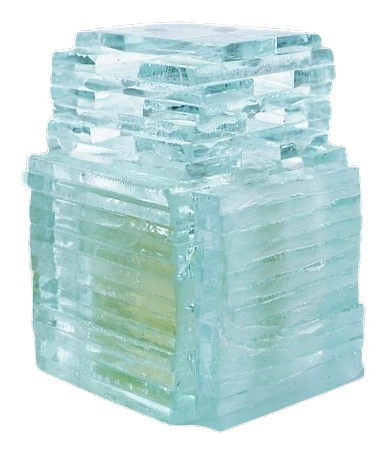
House of Atropa is known for unconventional naming and artisanal presentation. Tesseract, as part of the Crystal Collection, joins a house that approaches fragrance-making differently. The fragrance features unusual material choices, including cucumber, seaweed, and salt, which create a marine quality through actual materials rather than synthetic accords. The use of seaweed and salt brings an authentic aquatic character that differs from typical marine fragrances. The house's approach to fragrance creation emphasizes material quality and artistic vision.