The Story
Why it exists.
The beginning
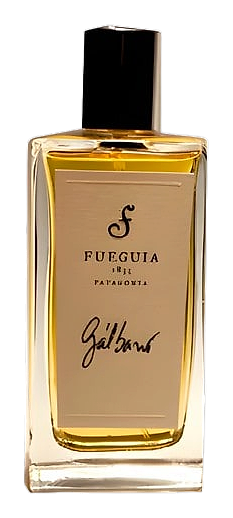
Gálbano is part of the Linneo collection, a set of compositions from Fueguia 1833 dedicated to Carl Linnaeus, the Swedish botanist who gave us the system for naming every living thing on earth. Julian Bedel, the house's perfumer, developed Gálbano as a focused study of galbanum, the raw resin whose aggressive, almost metallic green sharpness has long made it difficult to capture at full strength. The scent opens with a violent cut of bitter green, sharper and more vegetal than the leafy accords most compositions use to suggest chlorophyll. Within minutes that intensity begins to settle into something warmer and more resinous, as if the sap itself were slowly cooling on the bark.
What's unusual about Gálbano is its structure, or rather its refusal to behave like a traditional pyramid. Galbanum leads, but musk sits in the middle rather than at the base, giving the composition a clean, almost soapy warmth that keeps the green from feeling cold or metallic. Orange blossom arrives last, which is the opposite of how most florals are built. That inversion means the sweetness comes from below, like sunlight filtering up through grass rather than falling from above. The result is a scent that reads as green-floral in the accords but wears like something more botanical than any single category can contain.
The evolution
The first 15 minutes are all galbanum, and it's not polite about it. Sharp, resinous, almost bitter, with a metallic edge that smells closer to a freshly cut stem than any traditional perfume note. Some people find this aggressive. On the right skin it reads as bracing, clean, alive. By the 30-minute mark the musk steps forward, and the sharpness softens into something warmer and slightly soapy, like rain on warm stone. The orange blossom doesn't arrive until the second hour, and when it does it comes from underneath, a warm, honeyed floral breath that lifts the musk without overpowering it. By hour four the composition has settled into a close, intimate space: the green is still there but it's been absorbed into the warmth, and the orange blossom has taken over as the dominant impression. On clothing the next day, the galbanum returns, faint but unmistakable, like the ghost of the opening still hanging in the fabric.
Cultural impact
Gálbano sits in an unusual place: it's green enough to intrigue lovers of unconventional florals, but simple enough to divide people who expect a three-note composition to deliver more obvious complexity. The galbanum-forward structure makes it a reference point for anyone interested in what happens when a single botanical is given the spotlight rather than used as a supporting player. Wearers tend to describe it in terms of weather and landscape rather than compliments or occasions, which says something about where it lives in the fragrance world.