Heritage
A house, in its own words
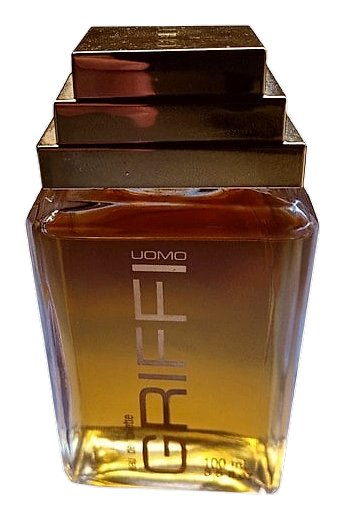
Federico Griffi traces its identity to fashion designer Federico Griffi, whose name became the label for the perfume house. The most firmly documented milestone is the launch of Griffi Uomo in 1980, the fragrance that anchors the brand's place in fragrance history. This debut arrived during a formative decade for Italian design, when several of the country's best-known fragrance names were establishing themselves with warm, woody compositions built for a new generation of style-conscious men. Griffi Uomo's use of sandalwood, Indonesian patchouli leaf, and amber places it firmly within that tradition of dense, woody, leather-adjacent masculine scents. The brand's catalogue is notably small. Maison KV lists four Federico Griffi fragrances, Parfumo lists five, and Fragrantica identifies Griffi Uomo as the house's sole entry in its fragrance encyclopedia. This modest output gives the house the character of a focused label rather than a prolific portfolio. Information about the founding date, the designer's own career path, and specific subsequent launches is not consistently documented across the available independent sources, so those details remain open to interpretation rather than confirmed fact. What is clear is the persistence of the 1980 debut as the reference point for everything that followed under the Federico Griffi name. The Federico Griffi approach appears to rest on a clear association with Italian fashion design, where fragrance functions as an extension of personal style rather than a separate exercise in excess. Griffi Uomo, the house's defining composition, uses a short, direct list of materials: sandalwood, Indonesian patchouli leaf, and amber. There is no elaborate narrative here, no visible emphasis on perfumer attribution, and no confirmed evidence of a founder manifesto or house philosophy. The restrained nature of the documented catalogue reinforces that impression. A designer name with only a handful of recorded releases suggests a preference for selective presence over constant expansion. The composition itself communicates through texture and weight, relying on enduring woody and ambery materials rather than bright top-note transience. For a fragrance house established in the 1980s, that philosophy reads as period-specific and coherent. The house built its reputation on a single masculine scent with a distinctive woody profile, and its subsequent catalogue has stayed close to that same register. Independent fragrance references document the house consistently without framing it around a formal creative doctrine, which leaves the fragrance materials and the designer's name to carry the identity.