

Heritage
A house, in its own words
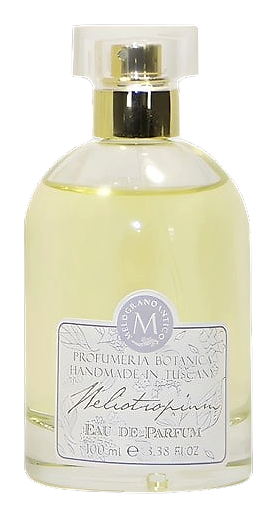
Melogranoantico Profumeria Botanica appears to be a relatively young fragrance label, but its name and creative frame connect it to a much longer tradition of Italian botanical perfumery. The word melograno means pomegranate in Italian, placing the house within a vocabulary shaped by Mediterranean gardens, botanical knowledge, and natural extracts used in fragrance-making. Available information does not confirm a founding year, founder, or a continuous company history, so the brand’s heritage is best understood through its chosen references rather than through a documented lineage. Its 2019 releases form the earliest firmly recorded milestone in the brand’s public catalogue. Heliotropium, Come una Rosa, and Eucalipto e Fiori Bianchi appeared that year, establishing a collection built around flowers, aromatic plants, and contrasting green notes. This approach also sits within the broader history of Italian perfumery, a tradition extending back to the Middle Ages. Santa Maria Novella, founded in Florence in 1221, provides a well-documented historical reference point for that tradition, though there is no evidence that Melogranoantico is directly connected to the Florence house. The distinction matters. Melogranoantico presents its own botanical identity rather than claiming an institutional history beyond what can be verified. Its story is one of a modern Italian house using the language of plants and the legacy of natural fragrance materials to shape a distinct catalogue. The name Melogranoantico Profumeria Botanica combines the Italian word for pomegranate with the idea of an old botanical practice. That pairing suggests a fragrance philosophy rooted in the contrast between vivid natural materials and the atmosphere of an imagined botanical archive. The label’s visible catalogue supports this reading. Heliotropium carries the association of the heliotrope plant, Come una Rosa names the rose directly, and Eucalipto e Fiori Bianchi combines eucalyptus with white flowers. Rather than describing a single lifestyle or fashion mood, the house builds its identity through recognizable vegetal themes and the relationships between them. The approach feels deliberately close to the language of botanical perfumery, where leaves, petals, woods, resins, and aromatic herbs can occupy the same composition. No named perfumer is linked to the three documented releases, which makes the ingredient-led identity more informative than claims about individual artistic authorship. The available research does not establish a detailed formulation manifesto, so it would be inaccurate to attribute specific techniques or intentions to the brand. What can be said is that the 2019 launch trio gave the house a coherent direction: fragrance names that invite a reading of scent through plants, flowers, and natural associations. For discovery-minded customers, this offers an inviting way to navigate the brand, whether drawn to herbaceous eucalyptus, the softness of white flowers, the symbolic charge of the rose, or the distinctive floral profile implied by heliotropium.