
The Story
Why it exists.
The beginning
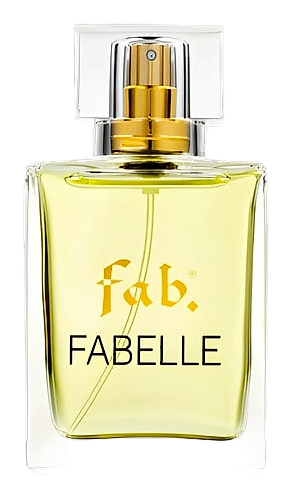
Fabelle was introduced in 2014 as Fab.'s first fragrance, a fact that gives the name a clear place within the house's short documented history. Bertrand Duchaufour created the scent with an explicit idea: Paris. The inspiration wasn't illustrated with landmarks or nostalgia, but treated as a polished mood of independent sophistication. That intention fits the composition neatly. Floral notes form the center, honey brings a warm sweetness, and apple and lemon supply a fresh, fruity counterpoint. Together, they describe a contemporary feminine fragrance meant to feel composed rather than ornate. There's polish here, sure, but also brightness. Fabelle doesn't need silk curtains to seem chic; a little fruit and honey already do the work.
What makes the note combination worth a closer look is its easy balance. Apple and lemon bring different kinds of energy: one crisp and rounded, the other sharp and clean. Floral notes soften that contrast without turning powdery, while honey adds a rounded sweetness that feels more convincing when placed beside citrus. It's a familiar family of accords, but the pairing gives Fabelle a distinct rhythm. The fruit makes the opening lively. The flowers keep it graceful. Honey ties them together instead of letting the scent split into two separate ideas. This is a composition built around transitions, which is also why it feels immediately easy to wear.
The evolution
Fabelle begins with a bright impression: apple and lemon lift the floral frame, giving the first impression a crisp, polished energy. Honey arrives early enough to keep that brightness from turning stark, adding a soft sweetness underneath. As the scent develops, the floral notes become the main event, carrying the composition through its prettiest, most graceful stretch. The fruit gradually reads less distinct, while the honey leaves a gentle sweetness close to the skin. This is where the scent settles into its strongest identity: fresh floral, gently fruity, and easy around the edges. Its projection remains present without becoming a dramatic room-filling statement, and the scent develops a loyal following among people who enjoy this balance. The next-day trace is soft and sweet, with less apple and lemon but still a clear floral character.
Cultural impact
Fabelle is associated with a Paris-inspired idea of sophisticated, independent femininity. It arrives from a moment when contemporary floral perfume can combine polished presentation with approachable fruit and honey notes, giving the scent a place in the everyday luxury fragrance landscape.
The House
Fab.Fab. is a fragrance house represented here through Fabelle, introduced in 2014. The available research does not establish the brand's founders, country, creative team, or wider catalogue with enough certainty for a full history. What can be said is specific: Fabelle gives the name a clear point of reference within modern perfumery. Its story sits against a much longer history of fragrance, one shaped by aromatic use in ancient cultures, the emergence of Eau de Cologne in eighteenth-century Cologne, and later experimentation with synthetic materials. That context places Fab. within a contemporary field with deep roots and distinct periods of technical change.
The Creator
Bertrand DuchaufourDuchaufour is the master of smoke and shadow, of incense rendered with painterly depth rather than theatrical force. Where many perfumers treat frankincense as a single note, he builds incense as a tonal range, capable of austerity or warmth depending on what the fragrance dem…