




Heritage
A house, in its own words
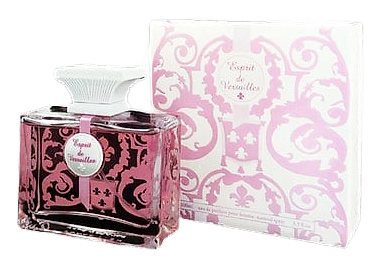
The Esprit de Versailles name carries the weight of one of the most important locations in perfume history. Versailles is widely credited as the birthplace of the perfumer's profession in the 17th century, a place where the cultivation of flowers and the crafting of personal scents became intertwined with aristocratic culture. The gardens of the Palace of Versailles, with their structured parterres and rare botanical specimens, created an environment where scent was both an art and a social instrument. This concentration of botanical knowledge and courtly patronage set the stage for the development of professional perfumery in France. The region surrounding Versailles continued to support a thriving fragrance industry for centuries, producing raw materials and finished compositions for royal and aristocratic patrons. Esprit de Versailles enters this lineage in 2013, launching six fragrances that adopt the language and imagery of the French court. The collection's character names (Le Duc, La Duchesse, Le Marquis, La Marquise) reference titles from the ancien régime, suggesting an intent to translate that historical atmosphere into modern olfactory form. The choice of Versailles as a creative anchor is not incidental. The town hosts the Osmothèque, founded in 1990 as the world's first perfume archive, which preserves over 3,200 historic scents and serves as a living library of the craft. Being situated in this landscape, where perfumery's past is actively conserved and studied, gives the brand a contextual grounding that few other niche houses can claim. Esprit de Versailles approaches fragrance as portraiture. Each composition is conceived as a character study, a distillation of a personality drawn from the world of the French aristocracy. Rather than building scents around abstract mood boards or trending olfactory categories, the house assigns each fragrance a human figure with a social role. La Duchesse and Le Duc form a pair. La Marquise and Le Marquis form another. Esprit de Versailles for Him and for Her serve as the collection's broadly accessible entry points. This structural choice reflects a conviction that fragrance is most compelling when it carries narrative. A scent becomes more than an accord when it embodies a way of being, a posture, a moment in history. The aristocratic framework also signals a particular aesthetic ambition. The brand seems to treat perfumery as a continuation of the courtly arts of presentation and refinement, traditions that defined French elegance for centuries. By choosing figures rather than fragrance families as the organizing principle, Esprit de Versailles invites wearers to inhabit a character, to choose a mask that fits their mood or aspiration. The approach aligns with a broader movement in niche perfumery toward storytelling and thematic coherence, but the Versailles-specific vocabulary gives it a distinctive identity.