The Story
Why it exists.
The beginning
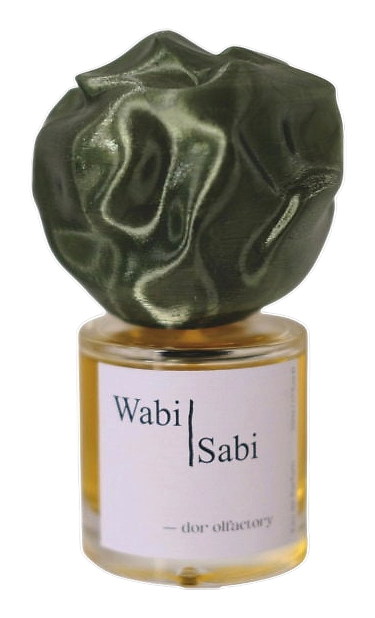
Alina Miron composed Wabi-Sabi as part of Dor Olfactory's haiku collection, a series that distills Japanese aesthetic philosophy into wearable form. Released in 2026, the fragrance takes its name from a Japanese concept that has long found expression in ceramics, architecture, and garden design. Dor Olfactory's collective approach treats scent the way a haiku treats language, paring things down until only the essential impression survives. Miron's brief was never to recreate a specific place. It was to capture a feeling, something closer to standing in a Kyoto temple corridor at dusk, where moss-covered stone, damp tatami, and the faint sweetness of incense blend into something older than memory.
What makes Wabi-Sabi structurally unusual is its refusal of obvious contrast. The composition stays inside a narrow band of green, mineral, and paper-dry textures throughout, with bamboo, green tea, lotus, ink, and rice appearing in dialogue rather than in sequence. Yuzu provides the only real lift, a clean acidic flicker that keeps things from dissolving into pure abstraction. The incense and paper notes do the heavy lifting, grounding the airy greens in something tactile and faintly human. There's no sweetness to soften the edges, no gourmand warmth to round things out.
The evolution
On skin, Wabi-Sabi opens with yuzu cutting through green tea, sharp, citrus-bright, almost electric. The first ten minutes are the loudest the fragrance will ever be. Bamboo arrives quickly, bringing that wet-green, slightly woody quality that feels more like a forest after rain than a stalk in a vase. By the thirty-minute mark, the citrus has receded and the composition settles into its true register, a papery, slightly smoky haze where incense and ink dominate. The lotus appears here, not as a flower but as water, pond water, the still green surface of something undisturbed. From the two-hour mark onward, the drydown becomes increasingly abstract. Rice lends a subtle starchy warmth that reads almost edible but never sweet. The paper note persists longest, lending the fragrance an oddly clean, slightly dry quality that clings to skin and fabric.
Cultural impact
Wabi-Sabi enters a fragrance landscape increasingly interested in quiet, skin-close compositions that reject the louder trends of maximalist niche perfumery. Its incense-and-paper character places it in conversation with temple-inspired fragrances, though its restraint sets it apart from most of its peers. The fragrance appeals to wearers who treat scent as atmosphere rather than accessory, people who want their fragrance to feel like a room they stepped into, not an announcement they made. What gives the fragrance its particular currency is the way it commits to a single idea and refuses to dilute it.