The Story
Why it exists.
The beginning
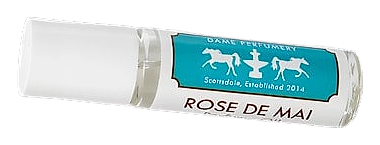
Dame Perfumery arrived in 2015 with a quiet point of view: restraint as craft. Founder Jeffrey Dame had worked fashion houses in Paris and New York before relocating to Arizona, where the light is different and the air smells like desert rather than department store. Rose de Mai became the house's opening statement, a soliflore, meaning the rose is not one ingredient among many. It is the only ingredient. Everything else in the composition exists to keep the flower company, not compete with it.
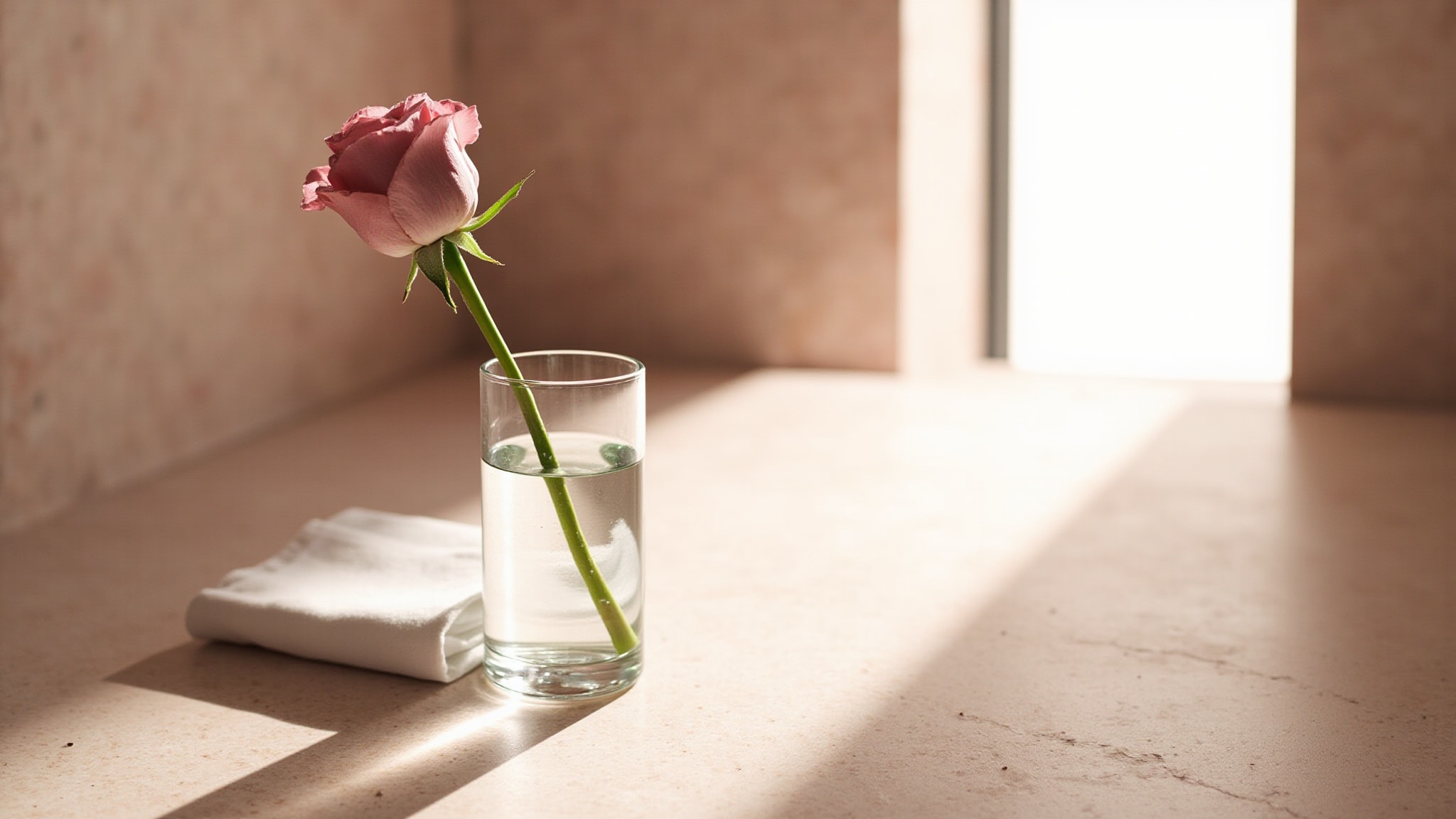
Rose de Mai occupies a specific and increasingly rare position in perfumery: the soliflore, a fragrance built around one botanical so the wearer experiences it in its most direct form. The note pyramid is simple because the concept is simple. There is no structural complexity to decode, no layered metaphor to appreciate. The difficulty, and Dame Perfumery leans into this, is that a single-flower composition leaves nowhere to hide. The rose must be good. It is. The result is a fragrance that reads almost translucent on first spray, then holds its shape as it warms against skin.
The evolution
The opening announces itself with a flash of rose and citrus, clean, bright, immediately present. This phase lasts perhaps thirty minutes before the citrus recedes and the flower settles into its true register: velvety, soft, slightly powdery, with that characteristic green undertone running underneath like the stem of a cut stem. The drydown is where Rose de Mai earns its quiet reputation. By hour three, the sillage has pulled inward, it projects just far enough to reach someone standing beside you, then fades to a skin-close warmth that stays intimate. By hour five or six, what remains is a memory of powder and the ghost of petals. It doesn't exhaust itself early. It simply decides when to stop.
Cultural impact
Rose de Mai arrived in 2015, a period when niche perfumery was trending toward maximalism, longer pyramids, louder projections, more ingredients competing for attention. Dame Perfumery took the opposite approach. The soliflore format, once common in French perfumery, had become rare in niche collections. Rose de Mai represented a particular kind of confidence: the willingness to let a single flower carry the entire composition, with nothing to hide behind.