The Story
Why it exists.
The beginning
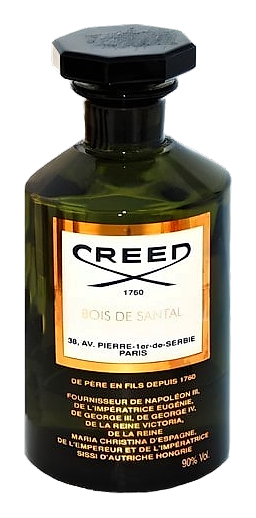
Olivier Creed built his 2000 vision around a single question: what happens when sandalwood stops being a background player? In most compositions, it's the base, a foundation, not a focus. Bois de Santal was the answer. Sandalwood, given room to breathe, to lead, to be the whole argument. Everything else, citrus, tonka, vanilla, exists in its service.
The pyramid does something unusual. Sandalwood appears twice, heart and base, creating a continuous thread from the first hour to the last. That's not coincidence. It's the structural choice that makes this fragrance work as a study in what sandalwood can do when no one tells it to step aside. The tonka and vanilla don't compete with it. They soften it, sweeten it, make it approachable without making it mild. The result is a sandalwood that feels complete, cream, warmth, powder, and a faint animalic edge all present in the same material.
The evolution
The opening lasts maybe fifteen minutes, citrus bright, green, a little sharp. Then the hand-off. Sandalwood steps in and stays. The heart phase is where Bois de Santal earns its name: creamy, warm, textured sandalwood that smells like the wood itself, not a sandalwood accord. It lasts through a full workday on most skin. The base arrives quietly, tonka and vanilla working in tandem, adding sweetness that doesn't compete, just extends the warmth. By hour six, you're left with powder and skin and a faint trace that only someone standing close will notice. The progression isn't dramatic. It's faithful. Citrus goes first. Sandalwood holds the middle. The sweet notes arrive last and stay longest. That's the shape of it.
Cultural impact
Bois de Santal sits comfortably in the Creed catalog as the choice for people who know what they want. Not the statement fragrance. Not the one that starts conversations across the room. The one that earns compliments from people standing close. It's the Creed for people who find Aventus too loud and Green Irish Tweed too sharp, warm, powdery, woody, and content to stay that way. The discontinuation hasn't dimmed interest among collectors who appreciate what it was trying to do: sandalwood, given room to be itself.