
The Story
Why it exists.
The beginning
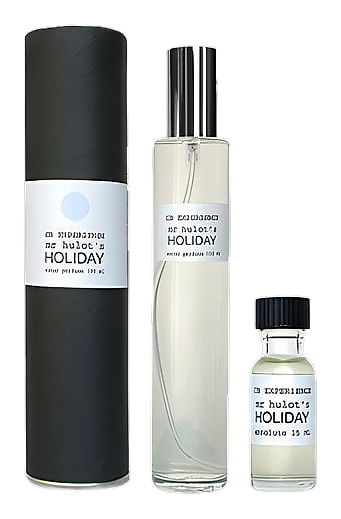
Christopher Brosius named this one after his favorite film, a classic seaside comedy. Where the film finds humor in the gap between intention and outcome, the fragrance captures something quieter: the smell of a place you return to in memory even when you can't return in person. Brosius has built a house around this idea of scent as autobiography, and Mr. Hulot's Holiday fits squarely into that project. It's less about smelling good than about smelling true, to a specific coastline, a specific mood, a specific film that clearly meant something to its creator. The leather, the seaweed, the driftwood: these aren't decorative choices. They're the actual aromatic memory of a seaside holiday that Brosius wanted to preserve and share.
What makes this composition unusual is the way it builds its maritime character around texture: the rasp of seaweed, the dryness of salt on skin, the mineral sharpness of wet pebbles. The leather doesn't fight this, it grounds it. Driftwood connects the two, acting as a bridge between the marine and the leathery, keeping the fragrance coherent rather than dissonant. It's a careful piece of construction, even if it doesn't smell constructed. The result is a fragrance that smells like a specific place rather than a general idea of the ocean.
The evolution
The opening arrives with salt and air, Mediterranean in character. Within minutes the driftwood surfaces, dry and warm, and the leather begins its slow build. The marine notes don't disappear so much as recede into atmosphere, becoming the air around the skin rather than the skin itself. The heart holds for several hours: mineral, woody, with the leather growing warmer and the salt taking on a skin-warm quality. There's a point around hour three where the fragrance seems to shift register entirely, less seascape, more personal, as if the scent has settled into the wearer's own chemistry. The drydown is quiet: driftwood and a ghost of leather, intimate and close. The next morning, trace elements linger on fabric, the mineral note that refuses to wash out entirely. This persistence on fabric speaks to the realness of the materials used.
Cultural impact
Part of CB I Hate Perfume's broader project of treating fragrance as personal narrative rather than commercial product. The film reference positions this squarely in the house's distinctive camp, appealing to those who want scent to carry meaning beyond the obvious. For someone who wants a fragrance to evoke something particular rather than conform to trend, this offers exactly that kind of specificity. It's a fragrance for those who think about what they smell and why it matters to them.