
The Story
Why it exists.
The beginning
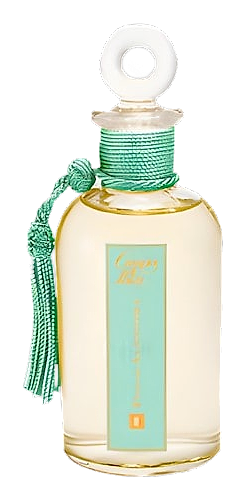
Campos de Ibiza was built around a singular idea: that an island's air could be worn. Flor de Almendra takes its name from the almond blossom, a flower that has long been associated with the landscapes of the island. Where other houses might have reached for spectacle, this fragrance chose the ephemeral. Almond blossom is not a bold note. It's fleeting by nature, a whisper of petals that lasts perhaps two weeks before the fruit sets. Translating that into a scent required trusting the material to do its work quietly, without amplification. The result is a fragrance that lingers close to the skin, a presence that rewards attention rather than demanding it.
The choice of a narrow pyramid, just four materials, is the statement here. Many fragrances build volume by stacking complementary notes, creating a chord that reads as richness. Flor de Almendra takes the opposite approach. Almond blossom opens alone, then yields to a duet of violet and African orange flower, then resolves to white musk. No rescue team. No supporting cast. Each material has to carry its own weight, and the result is a fragrance that reads as singular rather than blended. The violet and orange flower together create something slightly powdery, almost dewy, the smell of petals after rain, not the smell of perfume trying to suggest petals.
The evolution
The opening arrives with almost no force. Almond blossom doesn't burst onto skin, it settles, the way light settles through a window in early morning. For anyone expecting immediate impact, there's a quietness that could read as weakness at first. Then the orange blossom and violet arrive together, a soft floral middle that pushes the composition from delicate into genuinely pretty, not a word perfumes often welcome, but it fits. The drydown takes its time. White musk isn't an anchor so much as a whisper that refuses to stop. The fragrance maintains an intimate presence throughout its development, its subtle character revealed only to those in close proximity. There remains a delicate trace that speaks to its refined nature, hinting at a quiet sophistication that doesn't demand attention.
Cultural impact
Flor de Almendra occupies a particular corner of the floral category, not the bold gardenia-and-tuberose statement, not the minimal hedione-and-musks abstraction, but something in between. It reads as old-fashioned in the best sense: confident in its softness, uninterested in being the loudest note in the room. The fragrance has remained in production, which is itself a kind of statement in a market that constantly refreshes. Wearers tend to describe it as the scent of someone who doesn't need the room to know she's there, a quiet confidence that has aged well precisely because it never tried to be contemporary.