
The Story
Why it exists.
The beginning
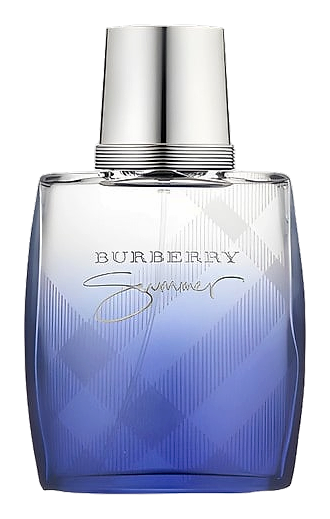
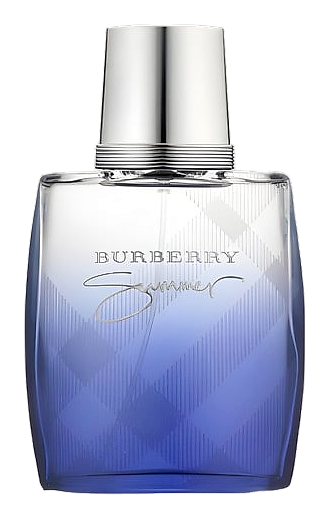
Burberry has always understood that a house built on protecting people from British weather would eventually want to bottle something more optimistic. Their fragrance philosophy, 'fragments of the brand', treats each scent as a piece of the house's identity, and in 2009, the fragment they wanted was summer itself. Not a generic warm-weather release, but something specifically British in its restraint: the kind of afternoon where the sun finally breaks through and everyone acts like it owes them something. Perfumer Emilie Bevierre-Coppermann was given a clear brief. Capture the hour. Make it last past August.
What makes this composition interesting is the tension between its brightest materials and its warmest ones. Yuzu is an unusual choice, more bitter and complex than straightforward grapefruit or lemon, and pairing it with green apple gives the opening a crispness that borders on green without tipping into linear freshness. The mint doesn't shout; it whispers, a cool undertone rather than a dominant note. Then the heart introduces cumin, an aromatic that most perfumers use sparingly because it can tip into polarizing territory. Here, softened by driftwood, it becomes the thing that makes the fragrance memorable rather than divisive, the herbal warmth that stops the top notes from feeling like a skincare product.
The evolution
The opening arrives fast, yuzu and green apple hit within seconds, bright and immediate. The mint follows almost immediately, not as a separate wave but as a cool thread woven through the citrus. For the first thirty to forty minutes, this is pure coastal freshness, the smell of air that hasn't been standing still. Around the hour mark, the driftwood emerges, and the composition shifts register. The citrus doesn't vanish; it softens, becoming less the sharp opening and more the background warmth that keeps the herbal heart from feeling heavy. The cumin and driftwood hold the middle ground for the next two to three hours, dry, aromatic, with just enough body to feel constructed rather than accidental. The drydown is where Burberry's restraint pays off. White musk, cedar, and amber don't arrive as a wall of warmth; they settle in quietly, skin-close, intimate. The projection drops to nearly nothing, but the fragrance persists for another two to three hours as a memory of the morning rather than a statement.
Cultural impact
Summer Men 2009 arrived at a moment when fresh aquatic fragrances were everywhere, the early 2000s had normalized the genre to the point of saturation. Rather than compete on those terms, Burberry's limited edition offered something with more structure: yuzu instead of sea salt, driftwood instead of synthetic marine notes, cumin instead of the expected lavender or geraniol. The fragrance didn't try to be different for the sake of it. It simply had more intention than its peers, which is perhaps why it developed a small devoted following among people who wanted a summer scent that felt like it had thought about itself.