
The Story
Why it exists.
The beginning
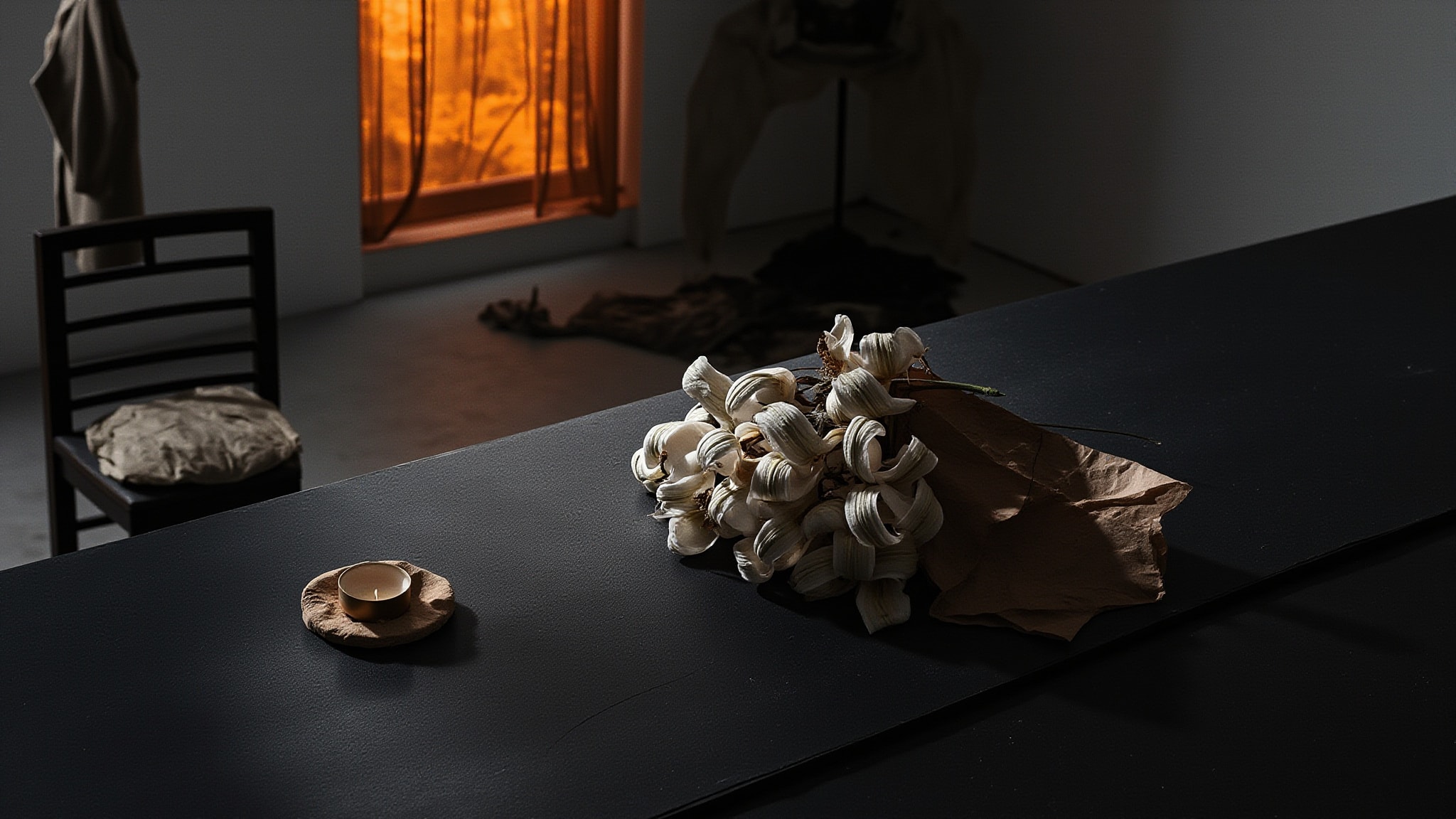
The Phantom Wooer arrived in 2007 as part of Black Phoenix Alchemy Lab's Ars Moriendi series. Listed notes for the composition include stargazer lily, datura, honey myrtle, moss, and green notes, a floral skeleton wrapped in chlorophyll and something faintly sweet. The arrangement reads like a bouquet placed at a doorway, lush and unsettling in equal measure, the kind of beauty that registers as a warning before it registers as pleasure. Perfumer Elizabeth Moriarty Barrial assembled these accords into a scent that feels less like a garden and more like the memory of one, where every living thing is just past its peak. The Phantom Wooer lives in an odd space for a ghost story: it is neither cold nor smoky nor mineral. It uses biology to do its haunting.
Barrial builds the haunting out of living things: a stargazer lily so heady it borders on narcotic, datura's toxic sweetness, honey myrtle lending the whole thing a mead-like undertone. The green notes and moss do the spectral work, giving the florals a watery, half-decayed quality that reads less like a garden in bloom and more like one caught in memory. The stargazer lily carries a weight that anchors the composition, creamy and pollen-heavy, almost too much for the rest of the bouquet to bear.
The evolution
The Phantom Wooer opens on a wave of green, the moss and herbal notes arriving first, slightly sharp, like crushed stems underfoot. The stargazer lily swells within the first ten minutes, heavy and almost overripe, the kind of floral that fills a room whether you want it to or not. Honey myrtle threads through it from the start, lending the opening a mead-warm sweetness that keeps the green from feeling cold. The datura deepens gradually as the composition settles into a quieter register, the toxic sweetness mellowing into something almost narcotic rather than sharp. The moss reasserts itself as a base, damp, vegetal, almost fungal at the edges, grounding the bouquet in soil rather than air. The honey doesn't fade so much as absorb into the florals, turning them golden rather than sweet.
Cultural impact
The Phantom Wooer holds an established position among fragrance enthusiasts drawn to literary and atmospheric compositions. Its placement within the Ars Moriendi series connects it to a broader curatorial project, one that gathers scents around shared themes rather than isolated note pyramids. Discussions of the fragrance tend to focus on its unusual handling of the ghost concept, its use of living botanicals where mineral or smoky accords would be expected. That choice gives the composition a distinctive footprint within BPAL's catalog, marking it as one of the more discussed entries in the series.