The Story
Why it exists.
The beginning
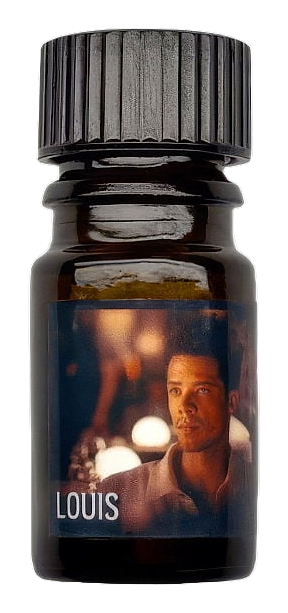
Louis draws its name from the character Lestat de Lioncourt, Anne Rice's vampire antihero, and arrives as part of Black Phoenix Alchemy Lab's collaboration with AMC to mark the third season of Interview with the Vampire. Elizabeth Moriarty Barrial, BPAL's founder and perfumer, built the scent to capture the decadence associated with The Vampire Lestat. The formula sits inside BPAL's The Vampire Lestat collection, a licensed line that translates Anne Rice's Immortal Universe into perfume oil. Launched in 2026, it enters the catalog as something closer to a character study than a traditional release, with bay rum, coffee, blood, magnolia, osmanthus, burnt sandalwood, and patchouli composing the accord.
The note structure maps a deliberate arc from sharpness to softness to scorched residue. Bay rum and coffee arrive up top, a swaggering introduction with the warmth of spiced liquor and the bitter edge of dark roast. Blood, listed plainly, anchors the composition in its gothic register, because this is a vampire fragrance and BPAL doesn't flinch from naming what others might allude to. Magnolia and osmanthus push through next, their creamy and apricot-skin sweetness softening the brutality without erasing it.
The evolution
The opening is almost violent. Bay rum hits first, warm and spiced, followed immediately by coffee and the unmistakable mineral glint of blood. The initial impression reads sharp, almost metallic, like spilled liquor on a cold surface. The boozy sweetness of the bay rum tangles with the dark bitterness of the coffee, and the blood note sits beneath both, lending the entire opening a faintly ferrous undertone. Then magnolia and osmanthus arrive, and the entire composition shifts into something surprisingly tender, almost sweet, a floral curtain drawn across the wreckage. The magnolia brings a creamy, lathered richness, while the osmanthus contributes its apricot-like, slightly leathery fruitiness, and together they round out the sharper edges of the opening.
Cultural impact
Louis lands squarely inside BPAL's literary-occult register, the same territory as Perversion, Snake Oil, and Dorian. It is a licensed collaboration with AMC tied to the third season of Interview with the Vampire, a release that extends BPAL's existing Anne Rice-inspired work with a sharper, more atmospheric profile. Within the catalog, it sits comfortably alongside other compositions that draw on gothic literature and mythic archetypes, but with the specific narrative weight of a character-driven tie-in.