The Story
Why it exists.
The beginning
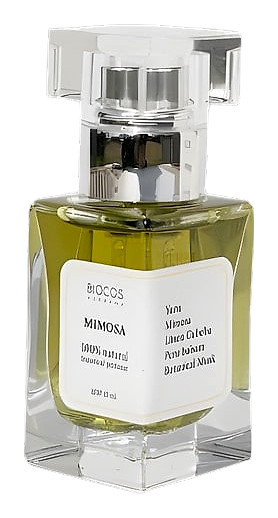
Jolanta Cinaitiene designed Mimosa for BIOCOS, drawing on Lithuania's natural cosmetics heritage to build a fragrance that translates the mimosa flower's powdery elegance into a wearable, intimate form. The scent opens with a delicate citrus brightness that feels like golden sunlight filtered through petals, soft and shimmering rather than sharp. There is an inherent tenderness to the composition, a quiet warmth that settles against the skin rather than announcing itself. The fragrance has a translucent quality, as if the scent were the memory of flowers rather than the flowers themselves. Yuzu and white grapefruit provide a tart, aromatic opening that reads almost solar, while the heart introduces subtle green and spicy undertones from litsea cubeba.
Yuzu brings a tart, aromatic brightness that reads almost solar, while white grapefruit keeps the opening grounded in citrus realism. The combination feels simultaneously fresh and warm, a duality that defines the fragrance's character. Litsea cubeba bridges the gap between the two worlds: bright enough to feel fresh, warm enough to never feel clinical. There is a subtle herbal quality to this transition that keeps the composition from feeling one-dimensional.
The evolution
The opening arrives with a tartness that feels almost solar, a burst of citrus brightness that carries a certain immediacy. Yuzu and white grapefruit dominate this initial phase, their combined tartness creating a fresh, aromatic impression. As the fragrance develops, the character begins to shift. The brightness becomes herbal, almost green, with a subtle spice that keeps the heart from feeling flat. Litsea cubeba plays a central role in this transition, introducing warmth and complexity to what might otherwise have been a straightforward citrus composition. This middle phase forms the body of the fragrance, carrying its essential character forward. As it settles further, peru balsam and musk emerge, their vanillic sweetness and soft warmth replacing the earlier citrus vibrancy.
Cultural impact
The use of yuzu and white grapefruit connects to East Asian citrus traditions that have long influenced perfumery. These materials bring a distinctive tartness and aromatic brightness that feels both familiar and fresh within the citrus genre. BIOCOS's approach to botanical oils offers an alternative to traditional alcohol-based fragrance bases, appealing to those interested in how different carriers might influence the expression of scent materials. Mimosa takes a modern, minimal approach to the floral citrus genre, translating the powdery elegance of the mimosa flower into a wearable, intimate form.
The House
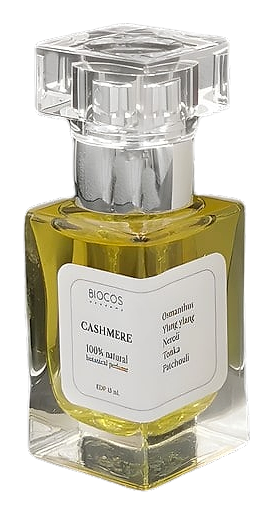
BIOCOSBIOCOS is a Lithuanian fragrance house specializing in botanical oil-based perfumes. The brand emerged from Laboratoires Biocos, a natural cosmetics company founded in 1994, though its dedicated perfumery line launched only in 2021. Jolanta Cinaitiene serves as the nose behind the collection. The brand currently offers eight fragrances spanning from 2021 through 2023, including Eden Rose, Magnolia, Cashmere, Nerola, Mimosa, Jazz, Ballet, and Tango. BIOCOS occupies a distinct position within the fragrance landscape, prioritizing botanical formulations over conventional synthetic compositions. The brand maintains a presence through Lithuanian retailer Kvepalai, which stocks and features the collection for international audiences. Each fragrance in the line appears to explore a specific botanical theme, from floral bases like rose and magnolia to more abstract constructions like Cashmere and Jazz.
The Creator
Jolanta CinaitieneCinaitiene gravitates toward botanical and natural fragrance materials, as evidenced by her work with Biocos and their Eden Rose composition. Her approach favors clarity and botanical authenticity over synthetic complexity.