
The Story
Why it exists.
The beginning
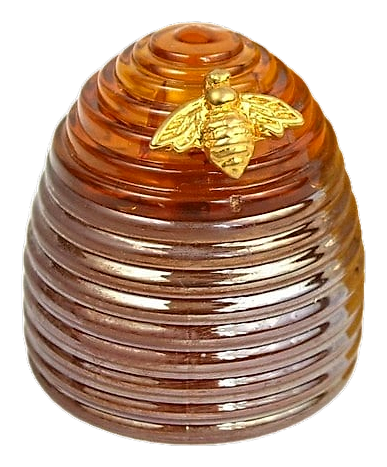
Honey Bee launched in 1978, part of Avon's collector's bottle series, where the vessel itself became part of the gift. The translucent amber glass turned the purchase into something to keep on the dresser long after the cologne was gone, with the bottle's shape echoing the bee at the heart of the fragrance's name. Inside that bottle, the Avon team built a simple composition around a single floral idea: honeysuckle, at peak bloom, caught mid-afternoon. No complexity for its own sake, no layering meant to impress a perfumery crowd. Just a sunny, unpretentious floral that knew exactly what it was. The scent presents its floral heart right away, and the honeysuckle note is the thread that runs from the first spray through the drydown.
What's interesting about Honey Bee is how few notes it carries. Honeysuckle, floral notes, fruits, that's nearly the entire pyramid. The fruit underneath adds a syrupy sweetness without specifying which fruit. The result reads as honeysuckle in the wild rather than honeysuckle reconstructed in a lab. The composition keeps its single-mindedness through every phase of wear, which is unusual for a fragrance built on such a stripped-down pyramid. Most colognes of that era leaned on walls of white florals to build their presence, but Honey Bee trusts one idea to carry the whole bottle.
The evolution
On skin, Honey Bee opens with the fruit first, a quick bright sweetness that arrives almost immediately. Then the honeysuckle takes over, full and unmistakable, with that warm almost-honey quality the real flower carries. It sits there comfortably through the wear, neither disappearing nor demanding attention. By the later drydown the composition has softened into a warm skin-close floral, more memory than statement. On fabric, particularly a scarf or collar, the honeysuckle clings longer, sometimes still detectable the next morning as a faint sweetness in the wash. As a cologne concentration it was never built for marathon performance, and that's part of its charm. It announces, then settles, then lingers close to the skin. The evolution from bright fruit to warm floral to soft skin-close sweetness happens in stages, each one gentle and predictable.
Cultural impact
Honey Bee belongs to a specific corner of American fragrance history, the Avon collector's bottle era, when the bottle was as much the gift as the scent inside. The translucent amber glass made it a dresser object, something displayed rather than hidden in a cabinet. For many who first encountered fragrance through a small bottle with a bee-shaped cap, those bottles were their introduction to fragrance collecting at all. The scent inside, uncomplicated and sunny, matched that mood perfectly.