
The Story
Why it exists.
The beginning
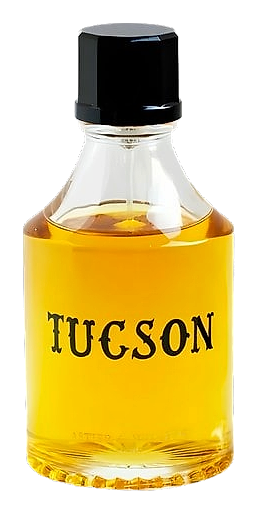
Tucson takes its name from the Arizona city, but its true subject is the Mediterranean landscape that inspired it. Alexandra Monet built this fragrance around immortelle and labdanum, two materials that don't require imagination because they're already extraordinary. The result is a scent that translates garrigue into liquid: dry, resinous, and slightly animal, like the landscape itself after a long summer without rain.
What makes Tucson work is the honesty of its materials. Immortelle gives honey and camphor in equal measure. Labdanum adds warmth that never becomes sweet. Thyme brings the herbal edge that keeps everything grounded. Birch appears quietly, adding a woody depth that stops the composition from becoming a one-note impression of dryness. These aren't novel combinations, they're the building blocks of the Provençal landscape, used here without decoration.
The evolution
The first minutes belong to thyme. Sharp, almost green, with an aromatic bite that clears the air. Then the immortelle and labdanum arrive together, honey, warmth, and a faint animal note that suggests skin warmed by sun rather than any kind of synthetic accord. The birch fades in and out, keeping the structure honest. By hour three, the fragrance settles into something drier and more resinous than it started. The honey fades. The warmth stays. What remains is the smell of stone that has been in the sun all day, mineral, warm, and very much itself. This is not a fragrance that changes dramatically. It's a fragrance that settles into truth.
Cultural impact
Tucson occupies a specific space in the niche fragrance world: the aromatic-resinous quadrant that appeals to people who've already moved beyond mainstream perfumery. It's not a crowd-pleaser, the thyme and immortelle are polarizing, but for those who respond to it, it's the fragrance that defines their collection. The 2022 launch came at a moment when the market was saturated with sweet ambers and fresh citruses, making Tucson's dry, herbal character a quiet statement of intent.
The House
Astier de VillatteAstier de Villatte is a Paris-based atelier that bridges centuries of French craftsmanship through two complementary disciplines: handmade ceramics and historically inspired fragrances. The house emerged from a ceramics workshop that opened in the heart of the Marais district, where artisans continue working with a proprietary black terra sigillata formula developed in the 18th century. Their fragrance collection draws from archival formulas, literary sources, and ancient scent traditions rather than following seasonal release cycles. Each perfume carries a narrative dimension, referencing specific periods, locations, or literary figures. The house collaborates with independent perfumers including Françoise Caron and Dominique Ropion, giving each fragrance a distinct olfactory signature rather than a house-wide accord.
The Creator
Alexandra MonetHer technique leans on a structured layering of top, heart, and base notes, yet she often subverts expectations by introducing a single, unexpected accord that shifts the fragrance’s direction. Alexandra favors natural extracts—bergamot, neroli, and Tuscan lavender—paired with…