
The Story
Why it exists.
The beginning
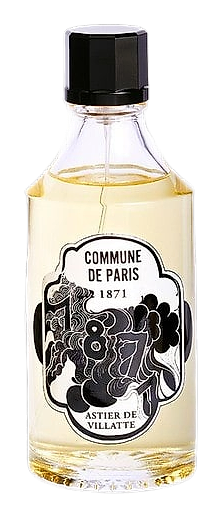
Commune de Paris arrived in 2010 from Françoise Caron, a perfumer who has never confused simplicity with simplicity of thought. The name points to 1871 Paris, when workers briefly seized the city and rewrote what governance might look like. The fragrance rewrites what an Eau de Cologne can be, starting with that explosion of Sicilian lemon, yes, but refusing to end there. Instead, it moves through the skin with an unexpected depth, the citrus bright but layered, revealing quieter notes of rosemary and herbal warmth that give the composition its staying power.
The structure inverts the cologne formula. Where most compositions treat citrus as an opening act that surrenders to something else, Caron lets it burn bright while the base builds underneath. Provençal lavender absolute and rosemary arrive quickly, not waiting politely for the top notes to exit. Coumarin adds that hay-like sweetness that bridges the citrus and the resinous heart. The result is a fragrance that reads as fresh and aromatic from first spray to drydown, but carries unexpected weight through the benzoin and labdanum warmth, the cedar and patchouli grounding. It's cologne that grew up.
The evolution
The opening announces itself immediately, Sicilian lemon and bergamot hitting like cold water, rosemary cutting through with an herbal sharpness. The lavender and bitter almond arrive, softening the citrus edge while coumarin adds a sweet-animalic warmth that most colognes avoid entirely. The resins build, adding depth without sacrificing the aromatic freshness. By hour three, cedar and patchouli anchor everything, vetiver lingering on skin. The drydown is resinous, slightly powdery, warm in a way that feels earned rather than applied.
Cultural impact
Commune de Paris offers something distinct in niche perfumery: a cologne that moves beyond standard citrus compositions without taking on the weight of an oriental or chypre. The lavender-coumarin combination gives it an aromatic warmth. The scent has a quiet confidence, the kind that doesn't demand attention but holds it once given.