The Story
Why it exists.
The beginning
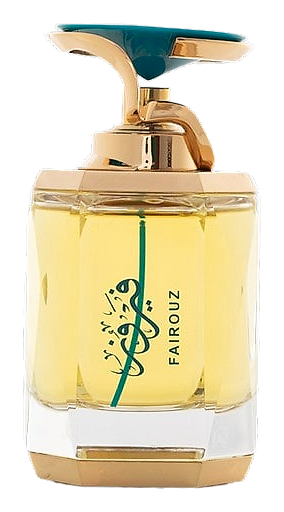
Fairouz takes its name from the Arabic word for turquoise, a gemstone prized across the region for its vivid, luminous quality. In many Arabic-speaking cultures, the name Fairouz carries connotations of something rare and radiant, a thing worth keeping. Arabian Oud built this fragrance around that idea: a scent that captures light the way the stone does, shifting as it moves. The brief was simple on paper, Italian mandarin and magnolia, warm and floral, with enough presence to last. But the execution needed to balance sweetness against structure, the citrus brightness against the creaminess of magnolia, without letting either overtake the other. The result is a fragrance that opens with immediate clarity and settles into something softer, more intimate, as it wears.
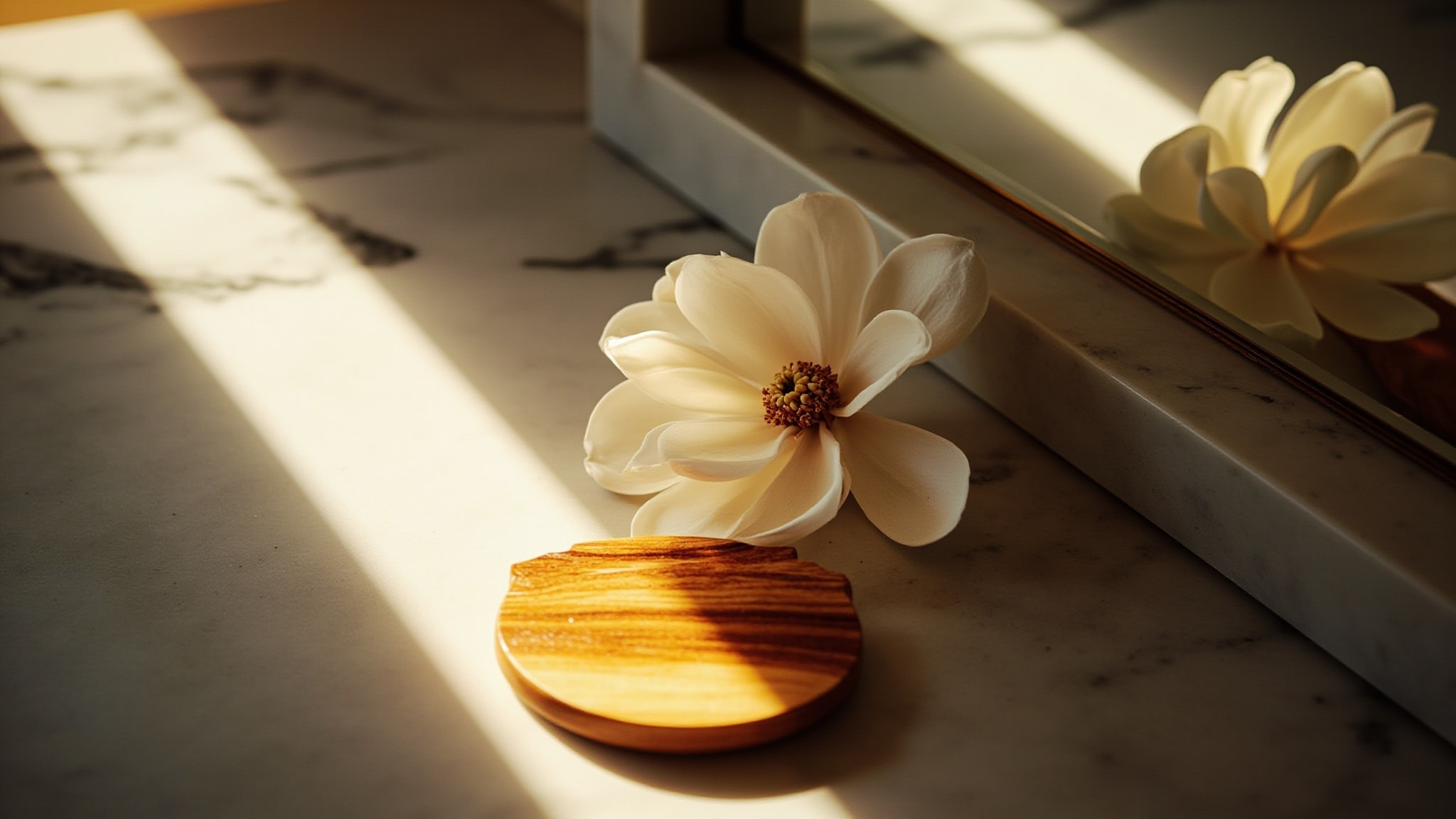
What makes Fairouz interesting is the interplay between its top and base notes. Mandarin orange is rarely the lead in a floral-gourmand composition, it's the spark that lights the fuse, then steps back. Magnolia, positioned as the heart, carries the fragrance for most of its life on skin. It's not a shy magnolia, either. The note reads creamy, almost buttery, with a floral sweetness that doesn't tip into indolic territory. The base pairing of vanilla and cedar is deliberate. Vanilla gives warmth and sweetness; cedar gives structure and a faint woody dryness that keeps the composition from becoming saccharine.
The evolution
The opening hits first, a quick, bright flash of Italian mandarin that reads like citrus zest, tart and immediate. It doesn't linger. Within minutes, magnolia takes over and Fairouz becomes something else entirely: creamy, full, unmistakably floral. The citrus doesn't disappear so much as dissolve into the background, keeping the magnolia from reading too heavy. The drydown is where the fragrance earns its length. Vanilla and cedar arrive together, blending into a warm, powdery base that stays close to the skin for hours. On most people, the sillage drops to intimate within the first two hours, present if someone is beside you, invisible from across the room. The longevity holds steady: eight to ten hours on normal skin, closer to six on dry skin. The next morning, there's a faint trace of vanilla and cedar on fabric. Still there. Still soft.
Cultural impact
Fairouz arrived as Arabian Oud's answer to a growing appetite for accessible luxury within Gulf markets and beyond. The name, meaning 'turquoise' in Arabic, signals an intention to bridge regional identity with international appeal. The brand's 1982 founding gave it decades of consumer trust to leverage, and Fairouz uses that foundation to position itself as a modern alternative to the house's more traditionally oud-heavy catalog. Its floral-gourmand character signals a deliberate softening, a willingness to adapt heritage sensibilities to contemporary taste. The release coincided with a period when Middle Eastern fragrance houses were aggressively expanding global distribution, making Fairouz part of a larger cultural export strategy.