
The Story
Why it exists.
The beginning
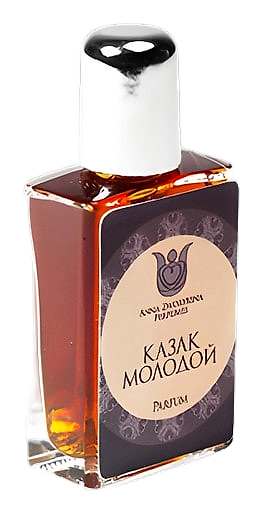
Cossacks were the free riders of the Eurasian steppe, warriors who answered to no crown, lived on open grassland, and measured freedom in miles of galloping horizon. Anna Zworykina grew up with that history woven into the culture around her, and in 2004 she began translating that world into scent. Young Cossack isn't a portrait of a costume. It's the smell of the wind that shaped them: dry grass, distant smoke, the animal warmth of horses moving in formation. She built this fragrance from the memory of landscapes that don't exist anymore except in smell.
What makes Young Cossack unusual is its refusal to smooth over the difficult notes. Costus and cumin, materials that carry a faint animalic sweateness, aren't accidents here. They're the horse. The wormwood isn't decorative absinthe glamour; it's the actual bitter herb growing wild across the steppe. Galbanum adds a green crackle that reads as wind rather than garden. And the oud doesn't smell like luxury boutique oud, here it sits dark and smoky, like embers after the campfire dies. This is a fragrance that treats accuracy as a form of respect.
The evolution
The opening hits like a door flung wide into a stable, herbal, acrid, immediate. Wormwood leads with a bitter-green bite that doesn't ease in. Then tobacco leaf arrives smoky and slightly sweet, followed by a dark leather note that isn't clean saddle soap. This is hide that's been worn. Wet, then dried. The heart introduces incense and a dried-flower quality from immortelle that adds a quiet formality, as if the ride has paused for a moment. Vetiver grounds it with earthy root. By the mid-drydown, the oud and oakmoss take over, shifting the fragrance from open air into something more interior, still smoky, but warmer, closer to skin. The cumin persists longest, a subtle animal warmth that refuses to fully leave. Eight to ten hours in, on fabric, there's still a faint ghost of smoke and herb. The next morning, the leather has settled into something almost like skin, familiar, worn-in, yours.
Cultural impact
Young Cossack occupies a specific corner of the niche world, those rare fragrances that feel more like historical document than consumer product. For collectors who grew up with Russian steppe imagery in literature and film, this scent carries weight beyond its materials. It doesn't try to translate exoticism for Western noses; it remains rooted in its cultural context. Among comparable smoky-herbal fragrances from independent houses, it stands apart for its refusal to domesticate the difficult notes, the cumin, the costus, the bitter green wormwood that most perfumers would soften or replace. Wearers who connect with it tend to do so deeply, describing it as the rare fragrance that smells like a place rather than an idea of a place.