The Story
Why it exists.
The beginning
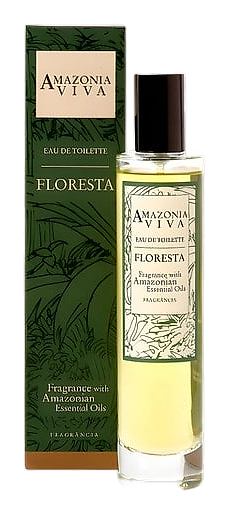
Floresta sits within Amazonia Viva's small, quiet catalog, a roster that includes Madeiras and Preciosa among its better-known compositions. The house draws its name from Portuguese, a tongue already braided into the rainforest's colonial and botanical histories, and its fragrances reach for something older still. Amazonia Viva built this composition to gesture toward wild, living wilderness, a bottle that carries the forest on the skin rather than framing it as an object to be escaped into. There is no celebrity perfumer publicly credited with Floresta's construction, and no glossy campaign lifted it into mainstream visibility. What exists instead is a composition that braids Brazilian copaiba balsam with Madagascan ylang-ylang, Bulgarian rose, and Java patchouli.
Copaiba balsam is the load-bearing material here, and it's an unusual choice for a perfume fronted by ylang-ylang. Where ylang-ylang leans narcotic and creamy, copaiba cuts in with a dry, resinous warmth that smells closer to sun-warmed tree sap than to a typical floral heart. This is what gives Floresta its grounded, almost meditative character, a stillness at the center of what could otherwise read as a tropical explosion.
The evolution
The first fifteen minutes belong to ylang-ylang, which arrives with a creamy, almost tropical density, ripe and slightly waxy, like the smell of warm fruit left on a wooden table. Bulgarian rose threads in underneath, offering a green, almost peppery lift that keeps the opening from sinking into pure sweetness. Around the thirty-minute mark, copaiba balsam takes over. The transition is gradual but unmistakable: the creaminess dries down into something resinous and woody, with a faint smokiness that reads like resin heated by late afternoon sun. The rose fades to a whisper but never fully leaves, lending a dusty sweetness to the middle phase. By the second hour, Java patchouli has settled into the base like a root system. It is dark, damp, and faintly sweet, with the earthy depth of forest floor after rain.
Cultural impact
Floresta occupies a quiet corner of the fragrance landscape, a composition more likely to be encountered through word of mouth than through glossy advertising. Wearers tend to describe it as atmospheric and immersive, the scent of stepping into a greenhouse after rain rather than walking past a perfume counter. Its copaiba-forward structure offers a resinous warmth that sets the composition apart, giving it a base of sun-warmed tree sap rather than the more conventional sweetness of vanilla or amber.