The Story
Why it exists.
The beginning
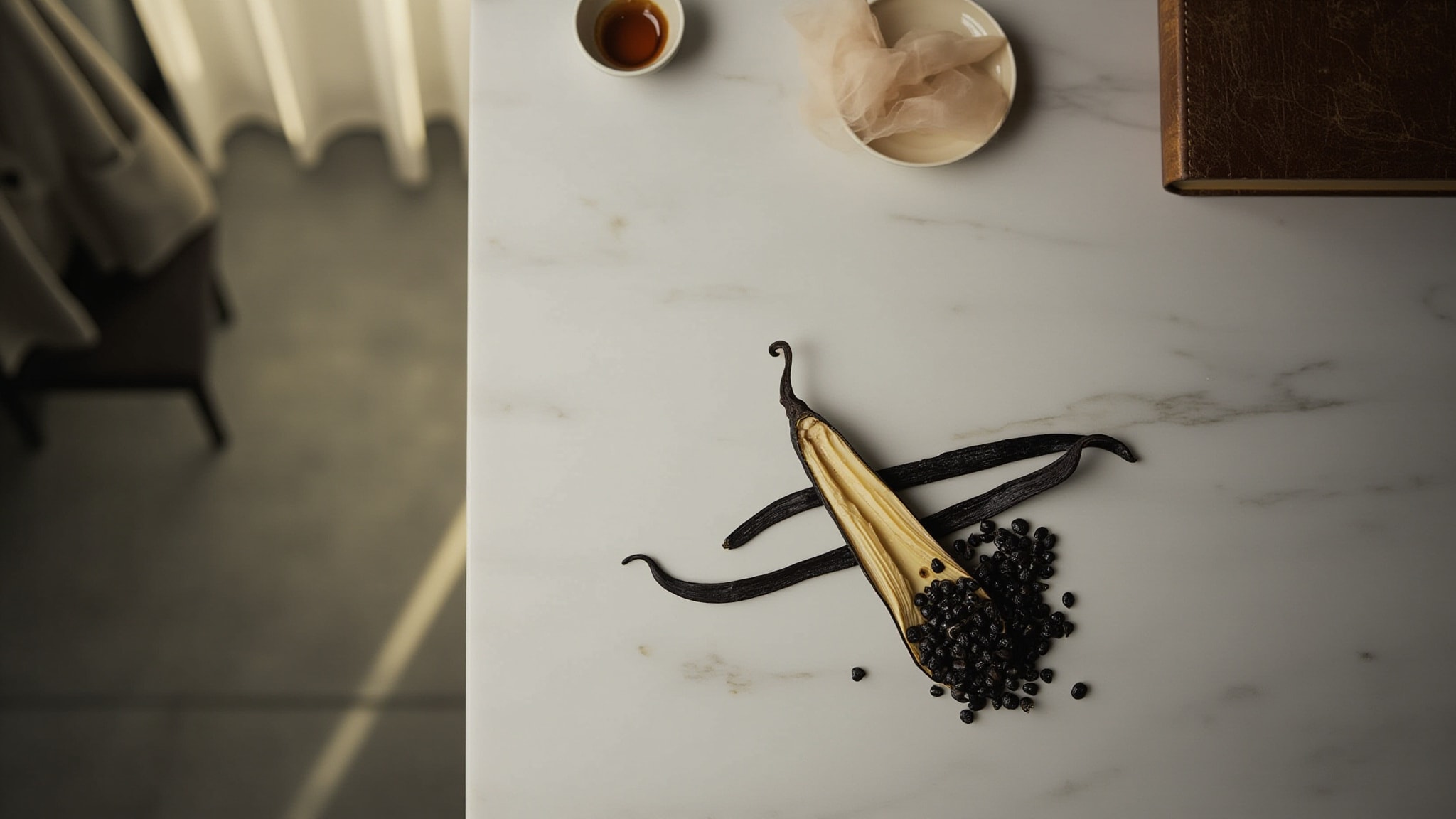
Incantation Vanille arrived in 2013 as part of Alkemia's expanding catalogue, the house already known for incense-rich compositions and a willingness to experiment with unconventional accords. Sharra Lamoureaux had been building toward something that could hold sweetness and shadow in the same breath. Vanilla was the obvious anchor, but the direction wasn't gourmand. It was ritual. The name itself suggests ceremony, an incantation is something spoken into being, a fragrance meant to mark a moment rather than simply smell pleasant.
What makes this composition interesting is the tension between tenderness and darkness. Mexican vanilla provides the warmth, but it's framed by benzoin and frankincense, resins that add smoke and a slightly medicinal edge. The leather isn't a dominant note so much as a grounding one. It keeps the sweetness from floating away. Tonka bean then adds its own kind of sweetness, softer and more coumarin-like, creating a drydown that feels like a long exhale rather than a sharp finish. The result is a vanilla composition that doesn't behave like one.
The evolution
The opening hits with resinous warmth, frankincense smoke that feels intentional, not accidental, moving against the sweetness rather than supporting it. Benzoin follows, thickening the air. For the first thirty minutes, this smells like an apothecary, like old wood and sacred smoke. Then the leather arrives. Not a wallop, more like a slow reveal, the Moroccan leather asserting itself beneath the smoke, adding a tactile quality that grounds the sweetness. The vanilla begins to read as warm rather than sweet, and the tonka smooths everything into a finish that lingers close to the skin for hours. On fabric, the drydown can last into the next day, faint, warm, almost nostalgic. This is a fragrance that earns its name.
Cultural impact
Vanilla has anchored perfumery for centuries, but vanilla-forward scents with smoke and incense broke into mainstream consciousness in the 2010s. Incantation Vanille arrived in 2013 during a surge of interest in indie and niche fragrances that prioritized artistic expression over commercial appeal. The 2013 launch challenged conventions by pairing warm, food-adjacent vanilla with the austere, ritualistic qualities of frankincense. This combination reflected a broader cultural moment where consumers sought complexity and narrative in their purchases, rewarding fragrances that told stories rather than simply smelling pleasant.