The Story
Why it exists.
The beginning
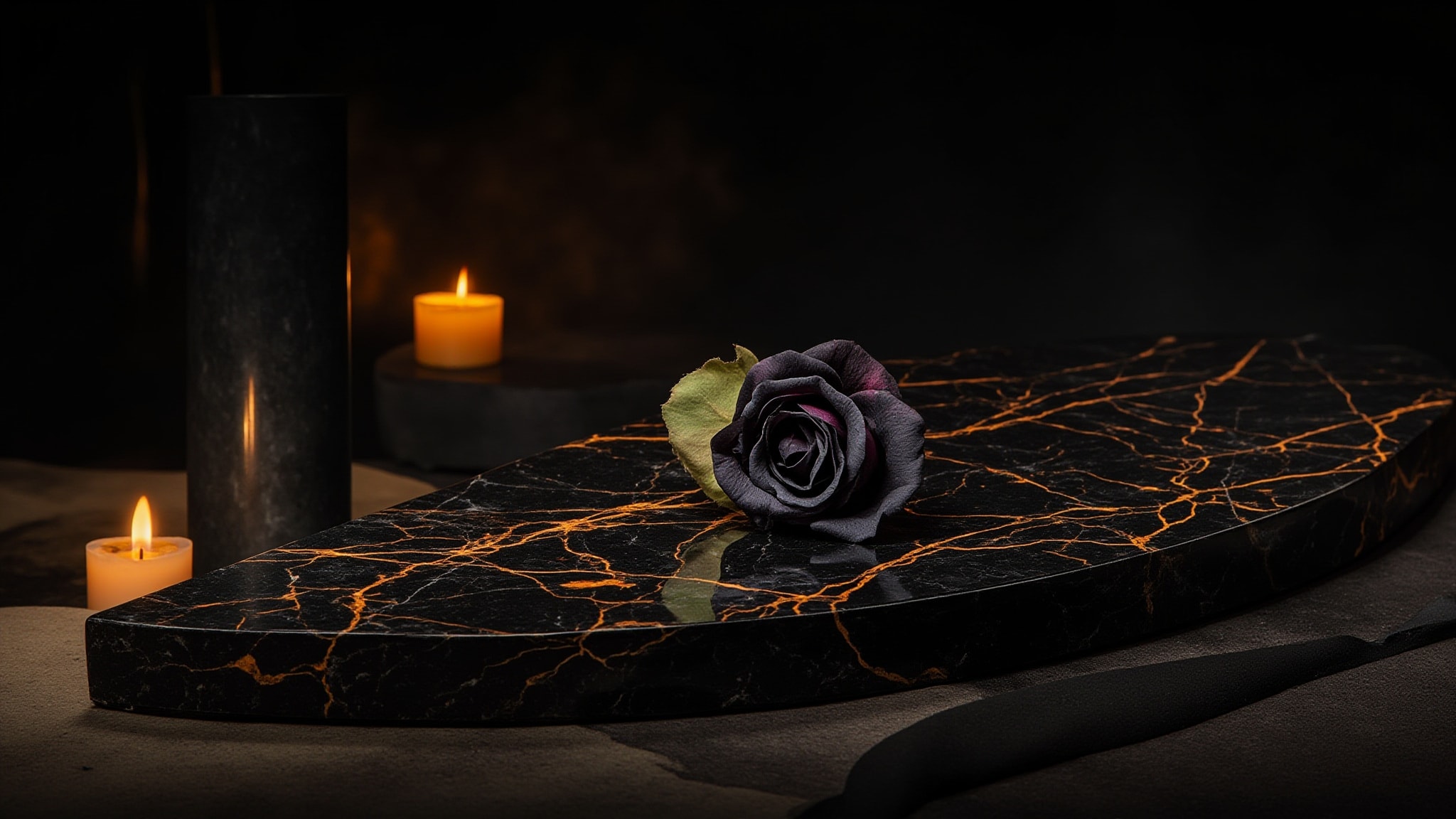
Sharra Lamoureaux created Black Roses in 2012, at a moment when dark florals were still considered a niche curiosity. The inspiration wasn't a flower, it was an idea. What draws people to darkness? Not tragedy for its own sake, but the honesty of it. The roses in this fragrance aren't the kind you'd give anyone. They're black, they don't apologize, and they smell like something worth choosing over something safe. The oud and opium were added deliberately, to make sure the darkness had weight, not just aesthetic.
The notes, Indonesian musk, oud, black rose, saffron, Darjeeling tea, patchouli, are grounded in gothic poetry and dark romanticism. The perfumer built this as a counter-argument to rose as sweetness. Black rose here is resinous, blood-dark, and unapologetic. The saffron doesn't sweeten the oud, it sharpens it, giving the composition an almost medicinal edge that keeps the florals from going soft. Patchouli and opium in the base are not decorative, they're structural. They keep the fragrance rooted in earth rather than air, making Black Roses feel like something you live in, not something you visit.
The evolution
The opening is a trick. Bergamot and neroli arrive bright, almost soapy, the kind of cleanliness that makes you think you know where this is going. You don't. The saffron in the top notes is the first warning. It burns clean, medicinal, nothing sweet about it. Then the black rose arrives, and it doesn't behave like a floral. It reads dark, almost resinous, like crushed petals left too long in a closed room. This is the transition that defines Black Roses, the moment the brightness surrenders to something with teeth. By hour two, the drydown asserts itself: musks, oud, vanilla, patchouli. The sillage drops from moderate to intimate, close to skin, warm rather than announced. This is when Black Roses becomes yours alone, a warmth that lingers past dinner, past midnight, into the next morning as a quiet trace on fabric.
Cultural impact
Black Roses found its audience in the overlap between gothic culture and indie fragrance communities. It's the kind of scent that earns devotion precisely because it refuses to soften. Alkemia built its reputation on compositions that don't negotiate with convention, and Black Roses is the brand's most committed argument for darkness as its own kind of beauty.