The Story
Why it exists.
The beginning
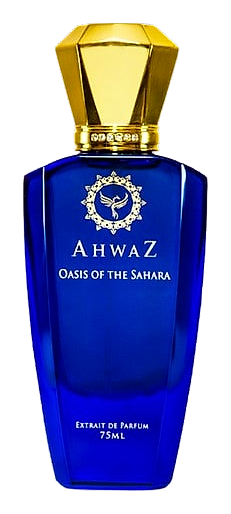
The name says everything. Oasis of The Sahara is about the relief found in extremity, the moment the heat breaks into cool shade, the second water touches your lips after hours of dry air. Ahwaz built this fragrance around that pause. The 2016 launch placed it among ten debut compositions, but this one carried a different weight: it was the house's most literal concept, a scent designed to transport. The perfumer understood that an oasis isn't just water. It's contrast. It's survival made beautiful. Patchouli anchored the brief, its earthy, camphorated character standing in for cracked earth and dry wind. But the Sahara without an oasis is just a desert. So vanilla arrived as the cool center, the shadow under palm fronds, the unexpected mercy in a hard landscape. Black musk added depth without darkness, the smell of shade that holds warmth rather than cold. Sandalwood and cedar built the canopy.
What makes this composition interesting isn't any single material, it's how patchouli behaves when surrounded by sweetness. Unadorned patchouli can read medicinal, camphorated, even dirty. But introduce vanilla and tonka bean early enough, and the same material becomes soft, almost plush. The black musk amplifies this effect: it doesn't compete with the patchouli's earthiness, it contextualizes it. Suddenly that camphorated quality reads as cool rather than harsh. The cedar and sandalwood don't arrive until the drydown, which is unusual in warm spicy compositions where woods often anchor the opening. Here they function as memory, the oasis remembers the trees around it long after the water has gone.
The evolution
Patchouli opens the story. Earthy, slightly camphorated, the smell of cracked earth under direct heat. It doesn't announce itself so much as it settles in, insistent. The first twenty minutes are about that insistence, a dry, grounded presence that could read harsh if not for what comes next. Vanilla arrives quietly, threading through the patchouli like shade through sunlight. Not sweet in the obvious sense, tonka bean handles that, but cool. The black musk amplifies the coolness without adding darkness. What emerges is the oasis itself: relief, shelter, the specific comfort of being out of the sun. The drydown belongs to the woods. Sandalwood and cedar rise slowly over the next several hours, wrapping the vanilla and patchouli in something warmer, more resinous. The tonka bean persists, a sweetness that doesn't fade so much as dissolve into skin warmth. By hour four, the fragrance has become something close and quiet. Not projection. Presence.
Cultural impact
Oasis of The Sahara occupies a crowded corner, warm patchouli-vanilla compositions aren't rare. What distinguishes this one is restraint. Where many fragrances in this family amplify sweetness or push patchouli's earthy character to extremes, Ahwaz held the tension. The result is a fragrance that reads as fantasy without tipping into caricature. It's the kind of scent someone reaches for when they want to be transported but not announced. Those who gravitate to it tend to share a quality: they've stopped needing their fragrance to argue for them.