The Story
Why it exists.
The beginning
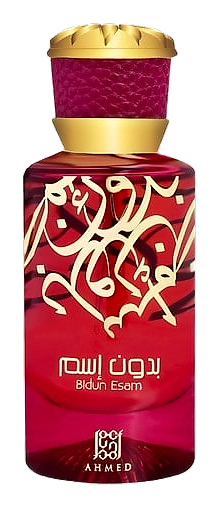
Bidun Esam translates to 'without a name', a fragrance made for those who don't need one. In the Arabic perfumery tradition, a scent that carries its own weight doesn't require a label. The name invites the wearer to define it on their own terms, not to inherit someone else's story. It's a quiet rebellion against the idea that fragrance needs explanation.
What makes Bidun Esam interesting is the collision at the top, rose and saffron don't naturally harmonize. Saffron carries a metallic, almost medicinal sharpness that can read as aggressive on first spray. Rose, meanwhile, has a natural sweetness that could go creamy or powdery depending on what surrounds it. Here, they meet as equals. Neither one backs down. The white flowers in the heart don't soften the tension, they lift it, giving the composition a translucent quality that lets the base oud arrive with authority. Cambodian oud is dense and resinous, with a leather-and-smoke character that doesn't disappear. It's the kind of base that anchors a fragrance and refuses to be forgotten.
The evolution
The first twenty minutes belong to saffron, sharp, metallic, demanding attention. Some people read it as citrus, others as something closer to cleaning product. The rose doesn't compete. It waits. Around the thirty-minute mark, the white flowers arrive: translucent, slightly sweet, lifting the whole composition upward. The saffron doesn't vanish, it becomes part of the background, adding a kind of mineral brightness that keeps the florals from going too soft. Then the oud enters. Cambodian oud has a resinous depth that doesn't play nice, it's leather, it's smoke, it's something that reaches into the skin rather than sitting on top. Musk and amber settle around it, adding warmth without sweetness. The drydown is the payoff: eight to ten hours of something that reads as animalic and intimate rather than loud. On fabric, it lingers longer. On skin, it becomes skin.
Cultural impact
Bidun Esam enters a market where fragrance serves as personal signature in Gulf culture, where oud and rose have defined Arabian perfumery for centuries. The name itself, 'without a name', speaks to a growing GCC consumer who wants distinction without announced branding. Ahmed Al Maghribi, operating from the UAE since 2000, built its presence across 190+ regional stores, responding to a demand for quality Arabic fragrances that compete with international houses. The 2019 launch arrives during a wave of regional houses reclaiming their perfumery heritage, where saffron-rose-oud compositions carry cultural weight beyond mere scent.