
The Story
Why it exists.
The beginning
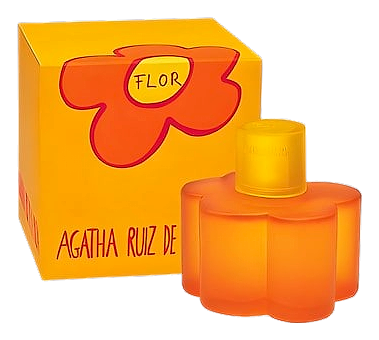
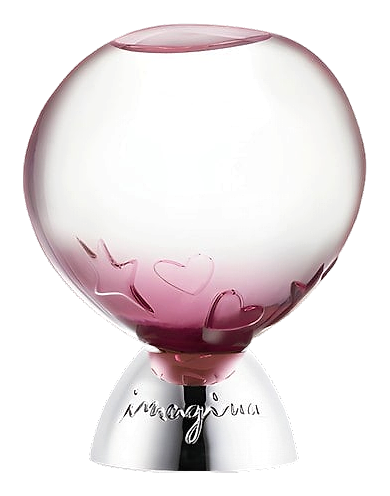
Agatha Ruiz de la Prada spent two decades building a fashion house around color, geometry, and unapologetic joy before turning to fragrance. By 2005, her line had dressed everyone from Spanish socialites to art world insiders, people who viewed clothing as self-expression, not camouflage. Imagina arrived as an extension of that philosophy: a fragrance that didn't whisper or posture. It simply existed, bright and floral, for the woman who wanted her scent to match her wardrobe, immediate, confident, and distinctly her own.
The choice of six florals, lotus, jasmine, rose, magnolia, cyclamen, over a citrus-sweet base tells you something. This isn't a fragrance built for mystery. It's built for clarity: the kind of scent that announces 'I'm here' without raising its voice. The Sicilian bergamot in the top isn't there to shock. It's there to open the composition the way a window opens a room, letting light in before the flowers take over. For a house built on maximalist aesthetics, Imagina is notably restrained. That's not an accident. It's the point.
The evolution
The bergamot arrives first, crisp and immediately citrus, about ten minutes of sharp brightness before the florals push through. Magnolia makes the first move, soft and almost creamy, followed by jasmine's warmth and cyclamen's subtle green edge. Lotus keeps everything slightly aquatic, like humidity in the air. By hour two, the rose emerges. Not assertive. Just present. The drydown is intimate and close to the skin, the kind of scent someone notices only when they're standing beside you. On fabric, it lingers another hour past when it fades from skin. The overall arc holds 4-6 hours on most skin types.
Cultural impact
Imagina never achieved the cult status of some Spanish fragrances, but it occupies a particular position within the Ruiz de la Prada lineup: the one you reach for when you want to smell like yourself, not like a fragrance. In the context of the brand's maximalist visual identity, Imagina reads almost as a counterpoint, floral without effort, accessible without being generic. It has aged quietly, without the reformulation controversies that plagued some of its siblings. For those who discovered it in the mid-2000s, it remains a reliable comfort, the scent of a specific kind of Spanish optimism that hasn't gone out of style.