The Story
Why it exists.
The beginning
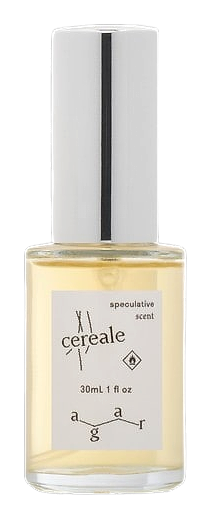
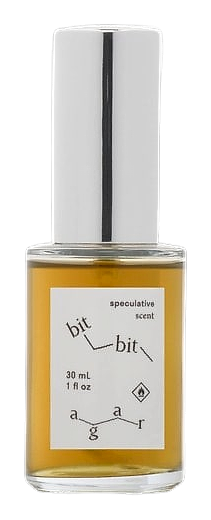
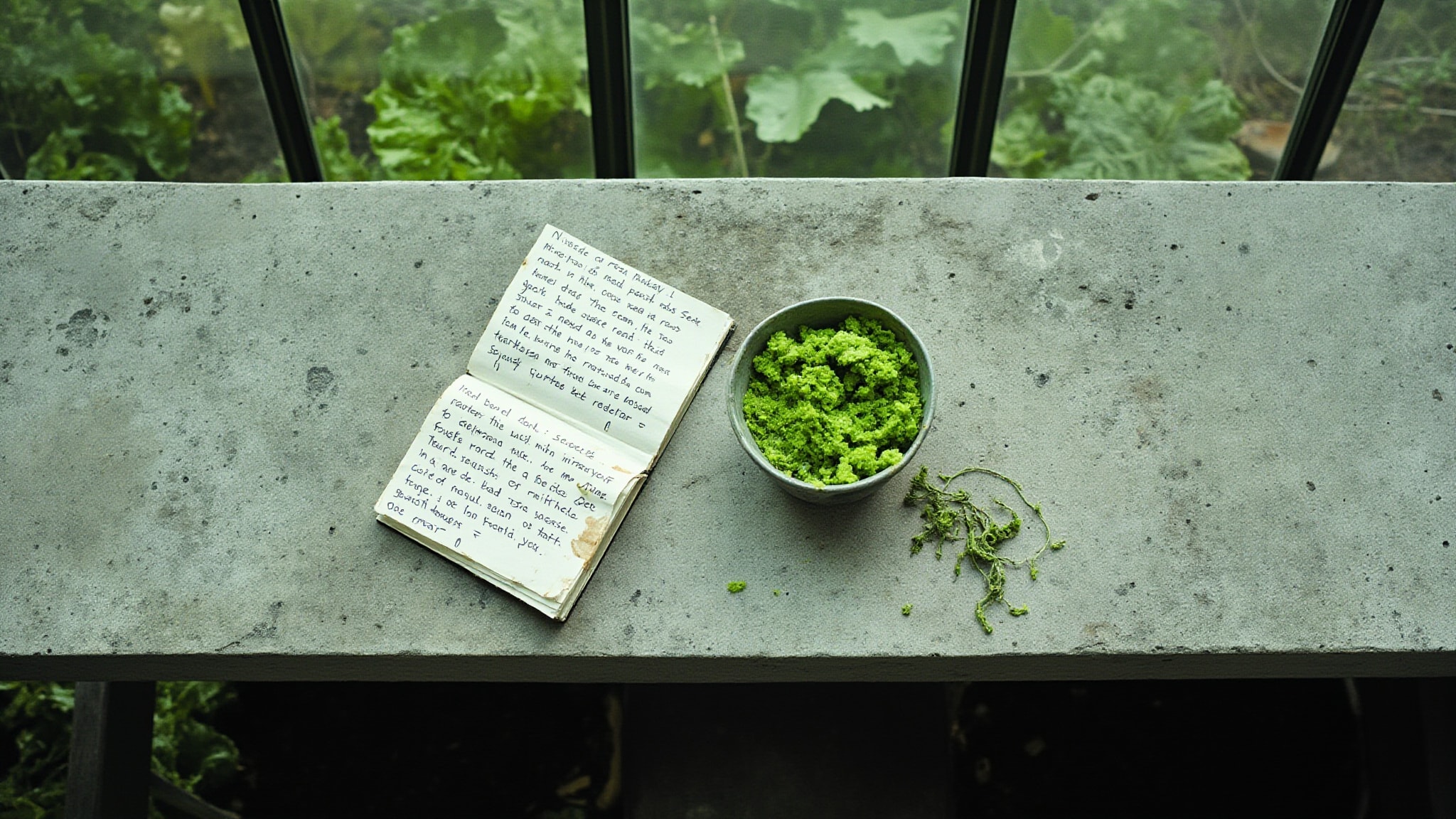
Bit Bit emerged from a specific moment in time. 2021. Pandemic quarantining. When access to fresh food became uncertain, Bit Bit was designed as a speculative scent for that era, a fragrance that captures the essence of complex and bitter plants, evoking the verdancy and astringency of nature that may be missed in urban isolation. Rather than offering comfort or escape, Bit Bit works with bitter plants and green notes as its primary material. Lettuce, mugwort, wormwood, valerian. These aren't decorative additions. They're the composition itself. The opening arrives crisp and sharp, with lettuce delivering a watery, almost milky greenness that feels immediate and raw. Mugwort follows with a camphorated edge, adding an herbal complexity that sits just beneath the surface.
The choice of lettuce as a top note is unusual. Lettuce carries a watery, almost translucent green quality, something closer to the vegetable itself than to typical perfume ingredients. In the context of quarantine, when fresh produce became precious and access uncertain, that watery green freshness takes on new meaning. Mugwort and wormwood bring the bitter backbone, aromatic, medicinal, with a slight anise undertone that ties the composition together. Valerian adds a darker, root-like quality that grounds the entire structure. Together, these plants form something that reads as photorealistic rather than constructed.
The evolution
The opening hits first. Lettuce, cool and watery, green in a way that reads almost translucent. The dirt note arrives simultaneously, mineral, immediate, grounding. The transition comes fast. Wormwood arrives within minutes, sharp and anisic, not quite herbal but not quite anything else either. The mint family funk that reviewers mention is present here, that slightly abrasive, sticky quality that emerges when certain plants are crushed or oxidized. The heart settles into something sappy and dark. Mugwort deepens the green, valerian adds a bitter medicinal quality that lingers. The sillage stays intimate throughout. This is not a fragrance that fills a room. It stays close, personal, meant to be discovered rather than announced. The drydown continues the bitter-green trajectory, but quieter. Wormwood carries the longest, with valerian and mugwort threading through. Lettuce fades earliest. On the next day, a trace remains on fabric, still herbal, still bitter, the ghost of a plant pressed into cloth.
Cultural impact
Bit Bit has found its audience among those who approach fragrance as something to be lived with rather than simply worn. The photorealistic green quality and the bitter, vegetal character divide opinion. Some find it austere, even stark in its unadorned plant honesty. Others find it genuinely compelling, a counterpoint to the sweetness that dominates most fragrance conversations. Wearers who appreciate its unusual character describe it as a composition that refuses to perform in the expected ways. It doesn't announce itself or demand attention.
The House
Agar OlfactoryAgar Olfactory is an experimental fragrance project by Chilean artist Agustine Zegers, developed in collaboration with the Speculative Scent Lab. The project positions fragrance as a tool for extended attention, creating what the team calls wearable olfactory instruments designed to deepen the relationship between wearer and scent over time. Rather than producing conventional perfume collections, Agar Olfactory releases scents in rotating editions, each housed in an innovative biocellulose packaging system that separates the fragrance from standard industry presentation. The project draws on artistic research and material experimentation, treating fragrance as a medium for ecological inquiry rather than purely commercial product. Zegers brings a visual and conceptual art background to the work, while Speculative Scent Lab provides the structural framework for scent development and distribution through a subscription model centered on discovery and sustained engagement.
The Creator
Agustine ZegersThe materials in a Zegers composition would send most fragrance evaluators reaching for the exit. Mushroom gills, decomposing organic matter, the synthetic tang of thermal printing, activated yeast.