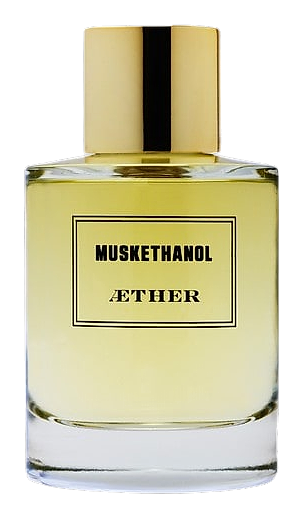

The Story
Why it exists.
The beginning
Muskethanol arrived in 2016, part of Aether's ongoing experiment in what synthetic molecules can do when given room to breathe. The name says it all: musk plus ethanol, lab-born, chemistry-forward. Perfumer Amélie Bourgeois worked with Aether's founder Nicolas Chabot to build a fragrance that could function as proof of concept: that modern aromatic chemistry deserves its own stage, unchained from the natural ingredients that usually dominate.
What makes Muskethanol distinctive is its refusal to bury the science. Where most fragrances deploy synthetics as invisible scaffolding, this one puts them front and center. The heart molecules, ambroxan, muscone, cetalox, are named on the label. The brand's transparency policy means you know exactly what you're wearing, and more importantly, why it was chosen. That's the intellectual appeal: a fragrance that teaches you something about chemistry while you wear it.
The evolution
The opening arrives with an aldehydic shimmer, bright, almost metallic, like sequins catching light. There's green here too, a cyclamen freshness that keeps things from going flat too fast. Then damascenone adds its rose-wine nuance, a fruity-floral whisper that cuts through the mineral. By the heart phase, ambroxan and muscone have taken over, clean, skin-like warmth with a slight animalic edge. The drydown is where sand arrives. Not beach sand. Steel sand. Warm, powdery, abstract. It lingers close to skin for hours, intimate and self-assured.
Cultural impact
Muskethanol sits at an interesting crossroads: it's a niche fragrance that functions almost as olfactory education. The synthetic molecules it features, ambroxan, muscone, cetalox, have become well-known among fragrance enthusiasts partly because of houses like Aether that put them on labels and invited curiosity. Wearers who appreciate Muskethanol often describe it as a gateway into synthetic perfumery, a scent that demystifies chemistry and makes it accessible.