Amelie Bourgeois
Amélie Bourgeois grew up in the Landes region of southwest France, surrounded by heather, pine forests, and endless wheat fields. Those early landscapes left an imprint. She studied cosmetology first, then shifted course when a brief encounter with fragrance awakened something deeper. In 2002, she began formal perfumery studies. Seven years at the prestigious Cinquième Sens in Paris followed, where she refined her craft under rigorous training. In 2010, she co-founded FLAIR, a Parisian creative studio, with Martin Deniso and later Anne-Sophie Behaghel. Her breakthrough came in 2009 with Rouge Assassin for Jovoy, a fragrance inspired by 1920s Paris and the cancan dancers of the Moulin Rouge, which earned her industry recognition and established her as a voice in independent perfumery. Today, she creates across a diverse roster of niche houses, from BDK Parfums to Une Nuit Nomade, building a body of work defined by emotional precision and unexpected harmony.
The hits
Notable creations








The signature
How Amelie composes
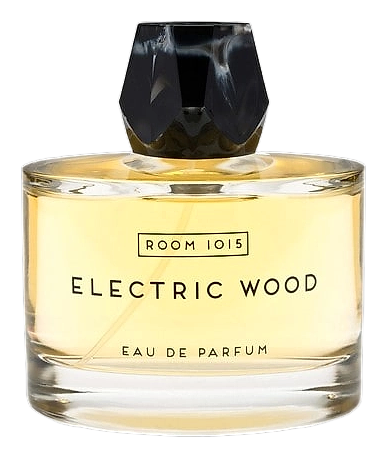
Bourgeois works within classical perfumery structures but pushes against the expected. She favors material combinations that surprise, finding harmony in contrasts others might avoid. Her signature emerges through a facility with unusual woods and resins, a recurring attraction to bitter almonds and warm balsams, and an instinct for composition that feels both rooted and fresh. Her range spans airy florals like Etoile d'Or, the plush intensity of Rouge Smoking Extrait, the warm resinous quality of Ambre Superfluide, and the modern cool of Electric Wood. Across her portfolio, a thread connects them: careful restraint, emotional intelligence, and an refusal to repeat herself.
Philosophy
What drives Amelie
Bourgeois returns often to sensory memory as the engine of creation. She speaks about wanting to make a fragrance inspired by her dreams, and her compositions carry that intimate quality, as if the scent already existed somewhere and she simply excavated it. She believes in harmony as a guiding principle, in finding balance not through safety but through unexpected combinations that somehow resolve. Her work draws from classical structure while refusing predictability. She treats each brief as an opportunity to discover something new about how materials behave together, letting the composition find its own logic rather than imposing one from the start.
In the same league