
The Story
Why it exists.
The beginning
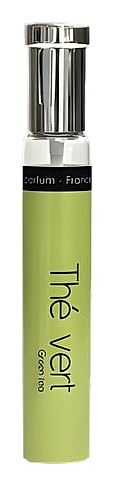
Thé Vert arrived as a question asked quietly: what does green actually smell like when you strip away the marketing? Not fresh as an adjective, not clean as a category. Green as in moss on stone, green tea steeping in a warm cup, the particular stillness of a forest at dawn. The house has built its identity around a certain intellectual precision, a way of taking abstract concepts and giving them tangible form. The name carries the French word for green, but the inspiration runs deeper than a simple translation. The deep greens of the northern forest, the way light filters through birch and pine, the green note that appears in perfumery as a signature rather than an afterthought.
What makes Thé Vert structurally interesting is the way the green tea doesn't behave like a typical tea note. Instead of appearing as a tannic dryness, it functions as a bridge, something between the bright citrus opening and the woody base that anchors everything. The rose heart is unusually restrained; it is there to soften the transition, not to dominate. The real structural innovation is the tobacco and gaiac wood acting as a base that can support citrus without making it feel superficial. Most fragrances with bright openings collapse into sweetness or disappear entirely.
The evolution
The opening hits fast, grapefruit and mandarin arriving together, bright and immediate. No preamble. For the first twenty minutes, this reads as a straightforward citrus: zesty, sharp, the kind of scent that announces itself across a room. Then the green tea begins to show itself, not replacing the citrus but working alongside it, adding a slightly bitter, almost herbal quality that keeps the brightness from feeling sweet. The rose appears around the thirty-minute mark, soft and quiet, more of a presence than a statement. By the hour, the citrus has receded and the real structure emerges: tobacco taking over as a grounding element, with gaiac wood providing warmth underneath. The drydown is where this fragrance lives longest, woody and slightly smoky on skin for several hours, with a quiet warmth that lingers close. On fabric, it lasts longer, the green-tea quality fading last.
Cultural impact
Thé Vert occupies an unusual position in contemporary perfumery, a green-fresh scent that does not apologize for having depth. In a landscape where fresh often means disposable, this one was built to last, to offer something beyond an initial burst of citrus that fades before you reach your destination. The fragrance has found an audience among people who appreciate complexity in unexpected places, those who understand that green does not have to mean simple. It is the scent of someone who walks into a room and does not need to announce themselves, because the work itself is announcement enough.