The Story
Why it exists.
The beginning
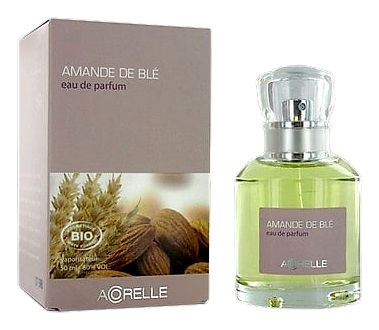
Amande de Blé arrived in 2008 as part of Acorelle's founding collection, a French organic house built on the conviction that natural ingredients could carry fragrance just as far as synthetic ones. The name, "almond of wheat", suggests something nourishing, grain-adjacent, rooted in the French countryside rather than the lab. Bitter almond opens the composition, lending that distinctive marzipan sweetness that smells like anise-tinged confection. The house chose restraint here: no heavy woods, no blockbuster projection, just a gentle floral-fruity structure that stays close to the skin from first spray to final fade.
What makes this composition interesting is the tension between gourmand and floral. Bitter almond gives it that edible, almost-kitchen quality, the smell of almond paste, of frangipane before it goes into pastry. But ylang-ylang in the heart adds a tropical warmth that lifts the sweetness without softening it too much. Apricot and mimosa in the base pull the fragrance toward powdery closure rather than a warm vanilla linger. It's the kind of structure that reads as comforting without being childish, there's a slight bitter edge to the almond that keeps it interesting.
The evolution
The opening announces itself clearly: bitter almond, bright and nutty, with a whisper of citrus that disappears almost immediately. Ylang-ylang takes over within the first ten minutes, not a gentle handoff, but a firm claiming of the middle ground. The floral warmth dominates here, sweet and tropical, the heart that keeps the fragrance from feeling like just a dessert note. Apricot and mimosa arrive quietly around the thirty-minute mark, adding fruitiness and a soft powdery finish that settles close to the skin. By hour two, you're leaning in to find it. The drydown is intimate, not a whisper, but a murmur.
Cultural impact
As one of Acorelle's earlier releases, Amande de Blé represents the house's entry into gourmand-floral territory, a soft, approachable scent that stood apart from the louder projections common in mass-market florals of the era. The 2008 launch predates the clean beauty movement by several years, positioning Acorelle ahead of a cultural shift toward natural ingredients. While discontinued, it remains a reference point for the brand's commitment to gentle, skin-close compositions over performative sillage.