The Story
Why it exists.
The beginning
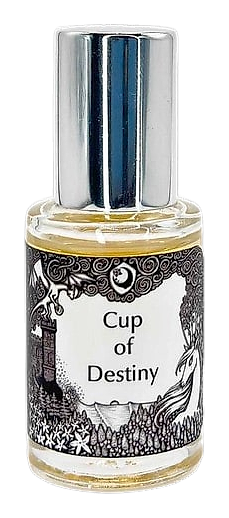
The oracle sees the skull of a dragon sprouting flowers in the dregs at the bottom of her teacup. That's the image that anchors everything in Cup of Destiny, a fragrance released in 2025 by A House on the Moon and part of the brand's Lost Fairytale collection. The skull-in-tea-dregs image sets the terms for what's to come: this is a scent about residue, about reading what's left behind, about the part of the cup most people tip out without looking. You don't wear Cup of Destiny so much as carry a divination with you into the room, something that invites slow interpretation rather than immediate declaration. The composition treats perfume as narrative rather than accessory, and the reading it offers pulls you closer the longer you sit with it.
The structural choice here is what sets Cup of Destiny apart from the typical gourmand-floral. Sage reversed the usual priority. Jasmine tea leads the architecture, with vanilla braided underneath rather than poured on top. The result is a composition where the floral front isn't decoration; it's the headline. The copal resin runs through the middle as a soft resinous hum, the kind of thread that keeps the florals from drifting into pure confection and pulls everything back toward something older and smokier.
The evolution
Cup of Destiny doesn't behave like a typical floral-gourmand. The opening moves fast: jasmine tea arrives sharp, almost bitter, like the first sip of a steep that's been left too long. Within fifteen minutes the vanilla arrives, but it doesn't dominate. It threads through the jasmine like steam through cold air, softening the edges without flattening them. The copal shows up quietly around the forty-minute mark, a resinous hum that you feel more than smell, like a candle burning two rooms away. By the second hour, the sandalwood takes over, and the composition sheds its floral sweetness for something warmer, creamier, almost suede-like. The drydown is the part that stays. The final read is pure milky sandalwood with a ghost of vanilla and copal resin still hanging on, a scent that seems to fold inward as it wears rather than fade outward.
Cultural impact
A House on the Moon builds compositions that lean into ritual and metaphor rather than chasing the loudest notes in the room, and the reception to that approach has been quietly consistent. Cup of Destiny continues that thread, taking the conceit of tea-leaf divination as its central image and running the composition through it without ever feeling gimmicky. The fragrance borrows from the old practice of reading what's left in the cup rather than what was poured, and the brand leans into that folkloric register with naming and copy that feel handwritten instead of corporate.