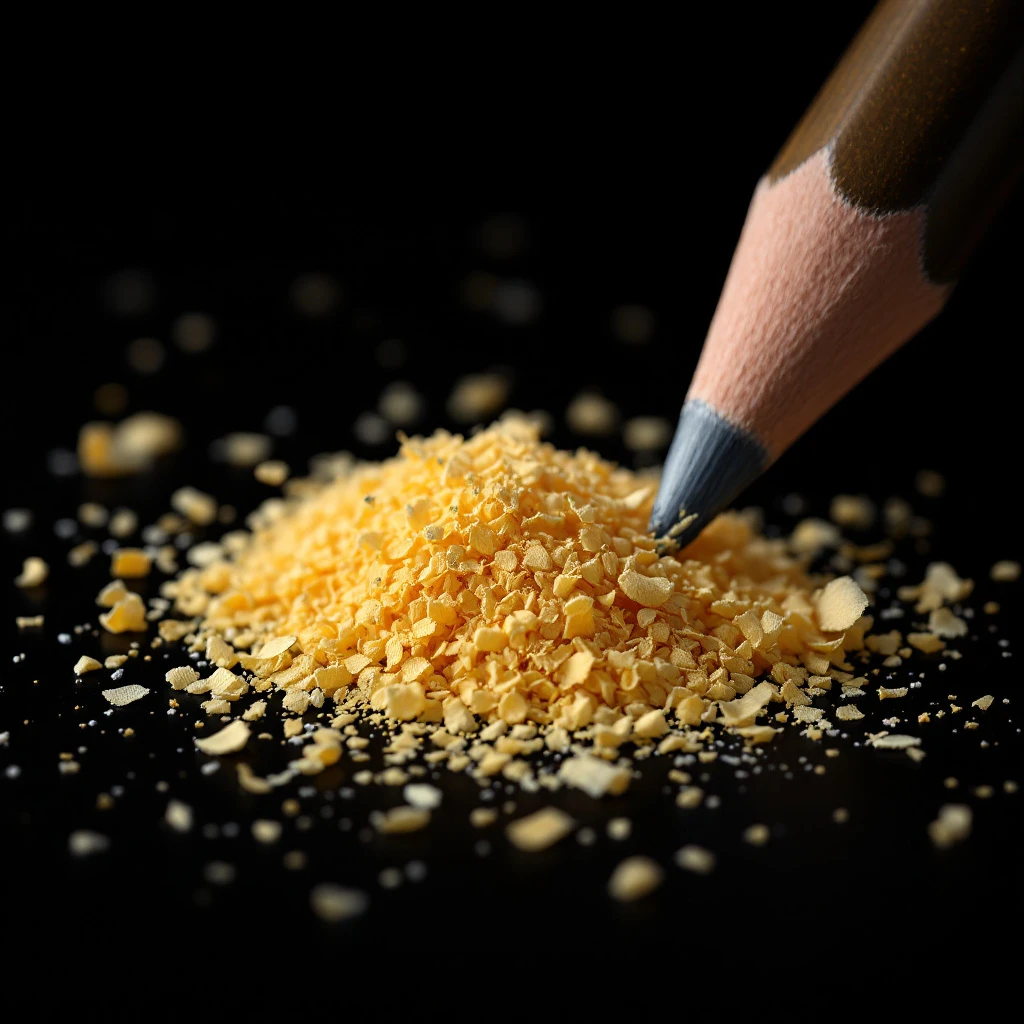
Pencil shavings
The unmistakable scent of cedar shavings spiraling from a freshly sharpened pencil. Dry, woody, and crisp, with a quiet sharpness that sparks immediate recognition. This is the olfactory signature of memory: a classroom, a sketchbook, the first day of something new.
Character
How it smells
The scent of first drafts and fresh starts
Caran d'Ache collaborated with master perfumer Alberto Morillas to create pencils literally infused with this exact scent, bringing full-circle a fragrance concept born from pencil manufacturing.



Origin
United States
The connection between cedarwood and pencils traces back centuries. Pencil makers discovered that certain cedar species, particularly those from the Juniperus genus, possessed the ideal combination of softness for easy sharpening and aromatic freshness that made the act of sharpening itself pleasurable. The pencil industry standardized around these cedars, and generations grew up associating their distinct scent with creation itself.
Perfumery took notice of this cultural imprint. When fragrances began exploring 'clean' and 'minimalist' narratives in the late 20th century, the pencil-shavings note emerged as a shorthand for crispness, focus, and the moment before expression. It represents a rare case where a fragrance note originated not from perfume tradition but from everyday experience, turning an industrial byproduct into an olfactory landmark.
Today it appears in countless woody and aromatic compositions, valued for its ability to evoke clarity and the creative impulse.
Wears it best
Fragrances featuring Pencil shavings

Brands
Brands known for Pencil shavings
Good to know
Questions, answered
The essentials on Pencil shavings in perfumery: how it smells, where it comes from, and how it behaves on skin.
What gives pencil shavings their distinctive scent?
Cedarwood essential oil, particularly from Virginia cedarwood (Juniperus virginiana). The wood contains cedrol and thujopsene compounds that produce the dry, woody aroma recognizable as pencil shavings.
Is pencil shavings a natural fragrance ingredient?
It exists in both forms. Natural extraction yields cedarwood oil via steam distillation of wood chips. Synthetic versions use aromachemicals like Iso E Super to replicate the note without natural materials.
Why do perfumers use pencil shavings as a note?
The scent carries strong associative power, evoking clarity, focus, and the creative impulse. It functions as an olfactory shorthand for 'fresh start' or 'clean canvas' in fragrance compositions.
What fragrances feature pencil shavings?
Popular examples include Escentric Molecules Molecule 02 (built around Iso E Super), Juliette Has a Gun Not a Perfume, and Nomenclature Adr, which directly reference the cedar-wood pencil aesthetic.
How is the pencil-shavings note created in perfume?
Perfumers combine cedarwood oil with aromachemicals like Vertofix Coeur and Iso E Super to build an accord that captures both the woody warmth and the dry, papery sharpness of fresh shavings.
Does pencil shavings smell different from cedarwood?
Pencil shavings smell like the specific cedar species used in pencil manufacturing. These species have a cleaner, drier character than other cedarwoods used in perfumery, which tend toward heavier, more resinous notes.
Can pencil shavings be extracted directly for perfume?
No. The note is reconstructed from cedarwood oil or synthetic aromachemicals. No perfumer distills actual pencil shavings, as the materials are already processed and lack the volatile compounds of fresh wood.
What makes pencil shavings nostalgic in fragrance?
Cultural conditioning. Pencils saturated Western childhood education, making the scent universally recognizable. This shared experience allows perfumers to trigger memory and emotion with remarkable consistency across audiences.