Charred Ginger
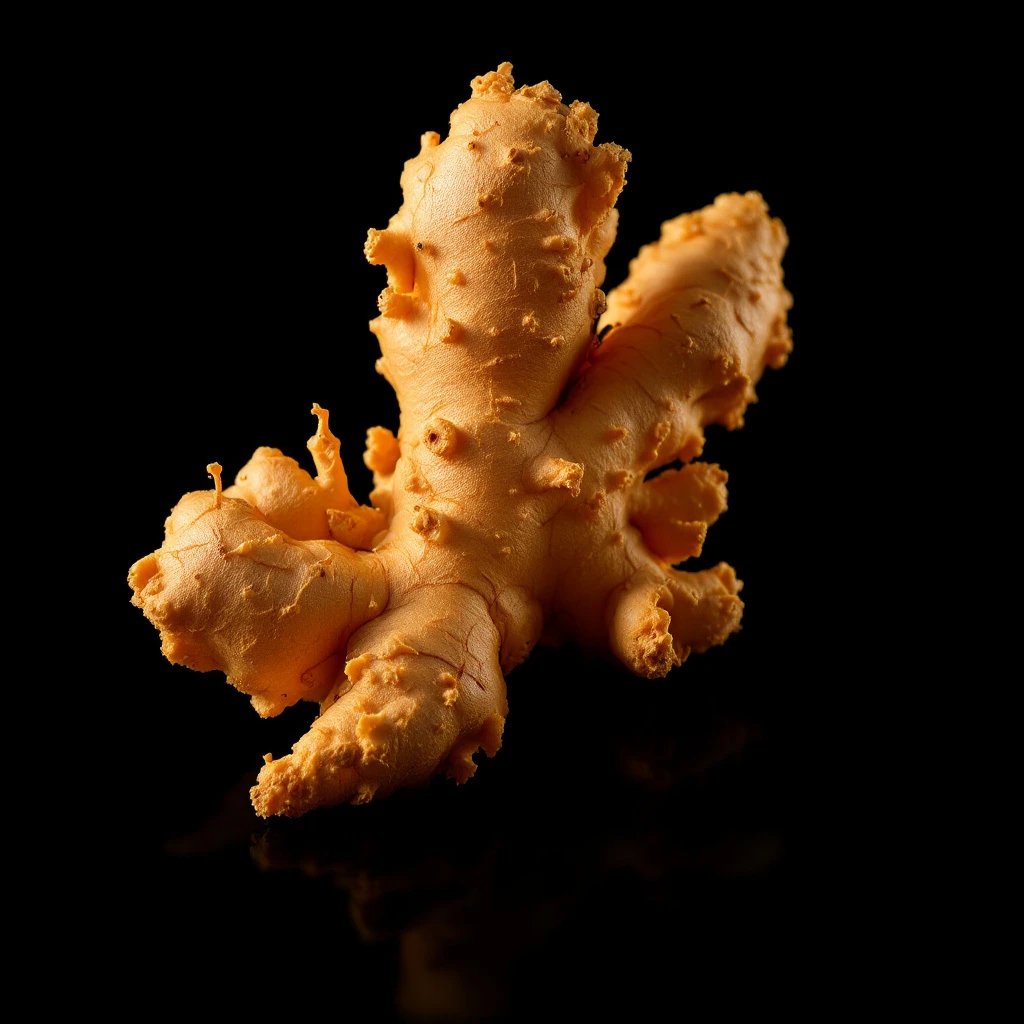
Charred Ginger transforms the bright heat of fresh ginger root into something darker, smokier, and deeply resinous. Through careful application of fire, the citrusy spice becomes a primal, smoke-kissed material prized in contemporary perfumery for its bold thermal depth.
Character
How it smells
Fire meets spice in a smoky, heat-infused contrast.
Charring ginger develops over 200 volatile compounds, including unique phenolic substances rare in fresh ginger, giving it an aromatic complexity that mirrors estate-distilled smoky woods.


Origin
India
Ginger originated in Southeast Asia, with India and China serving as ancient centers of cultivation and trade. Archaeological evidence places ginger use in India as early as 3000 BCE, where Ayurvedic traditions employed it for both culinary and medicinal purposes. Ancient civilizations also incorporated ginger into religious ceremonies, burning it as incense to honor deities.
The spice traveled westward along Arab and Roman trade routes by the first century CE, becoming prized throughout the Mediterranean world for its warming properties. Charred preparations of ginger parallel the ancient practice of charring woods and resins for ritual fumigation. The modern innovation of deliberately charring ginger root for perfumery emerged from experimental approaches in the late 20th century, as perfumers sought unconventional smoky materials beyond traditional frankincense or guaiac wood.
The dual nature of ginger—both fresh and burnt—reflects a broader trend in contemporary perfumery where familiar ingredients undergo transformation to reveal hidden dimensions. Today, Charred Ginger stands as a bridge between ancient aromatic traditions and modern inventive techniques.
Wears it best
Fragrances featuring Charred Ginger
Brands
Brands known for Charred Ginger
Good to know
Questions, answered
The essentials on Charred Ginger in perfumery: how it smells, where it comes from, and how it behaves on skin.
How is Charred Ginger produced for perfumery?
Fresh ginger rhizomes undergo controlled charring using direct heat, then solvent extraction produces a dark absolute. The process develops unique smoky compounds through thermal decomposition of the root's natural oils.
What does Charred Ginger smell like?
Charred Ginger offers warm, smoky depth with resiny, almost tar-like undertones. It retains faint traces of spiced heat but loses the bright citrus quality of fresh ginger, replacing it with primal, ember-like warmth.
Which fragrance families use Charred Ginger most often?
Charred Ginger appears most in oriental, woody, and smoked fragrance families. It adds thermal depth to amber bases and provides an alternative to traditional smoky materials like incense or birch tar.
Is Charred Ginger natural or synthetic?
Charred Ginger is derived from natural ginger root through thermal processing. No synthetic analog precisely replicates its unique combination of smoky and spicy characteristics.
What materials does Charred Ginger pair well with?
Charred Ginger complements oud, vetiver, sandalwood, and warm amber bases. Dark florals like dark iris or black orchid also pair effectively, creating sophisticated smoky-floral compositions.
How potent is Charred Ginger in a fragrance formula?
Charred Ginger functions as a highly potent material used at low concentrations, typically between 0.5 to 2 percent of total fragrance composition. Its intensity demands careful dilution to prevent aroma dominance.
Where is ginger for Charred Ginger production primarily sourced?
India remains the primary origin for ginger used in perfumery, with southern regions like Kerala and Tamil Nadu producing high-quality rhizomes with robust aromatic profiles suited for charring.
How does Charred Ginger differ from fresh ginger absolute?
Fresh ginger absolute carries bright, citrusy, sharp spice notes. Charred Ginger sacrifices this freshness for smoky, tarry depth—creating a completely different aromatic character suited to warm, primal compositions.