The Story
Why it exists.
The beginning
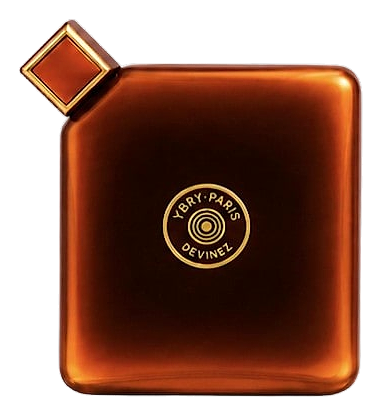
Devinez landed in 1927, a French perfume whose title means "guess" and whose arrival carried the playful spirit of an era when a scent asked something of its wearer. The original presentation bottle was designed by Cristalleries de Baccarat, René Lalique & Cie, the kind of collaborative glasswork that signaled how seriously the maison treated the vessel itself. That bottle was not a container but an object, a vanity piece meant to sit on a dressing table and catch the light as much as to hold what was inside. The name carried a dare: guess what this is, guess what it does, guess where it takes you. It was perfume as invitation rather than statement, a composition that played with the idea that fragrance could be a question rather than an answer.
What makes Devinez structurally interesting is the way it balances brightness against powder. The composition opens with a sparkling, effervescent quality, the kind of shimmer that lifts a floral heart and keeps it from sinking into sweetness. Where many florals of the period leaned toward singular expressions of rose or tuberose, Devinez built something more architectural, a structure held up by contrast. The cool, mineral quality of iris forms the center, while the bright aldehydes provide lift, and a warm base anchors everything so the whole thing never floats away.
The evolution
The opening arrives bright and almost soapy, crackling at the edges like static on silk. The first impression is clean and effervescent, a shimmer that feels almost metallic before it softens. As the composition settles, the powdery heart begins to emerge, cool and vaguely mineral, like the surface of a polished stone held up to the light. The sparkle fades gradually into something denser, more cushioned, and the scent begins to warm against the skin. What rises in the later stages is a soft, warm accord, something close to suede in its texture if not always in name, with a quiet muskiness that pulls everything inward. The projection quiets considerably as the hours pass, the composition moving from something you wear outward to something you wear close. The trace that remains is faint but persistent, a whispered last word that clings to fabric long after the skin has let go.
Cultural impact
Devinez exists in a narrow historical corridor, the late 1920s, when French perfumery was at its most opulent and presentation mattered as much as composition. Original bottles surface from time to time in vintage and auction listings, where collectors prize them for the flacon design as much as the juice inside. There is something quietly defiant about wearing one today, a deliberate choice to carry a piece of another era into the present moment. The scent belongs to a Paris that has long since changed, but the bottle and the formula still exist, still hold their shape, still do what they were designed to do nearly a century ago.









