
The Story
Why it exists.
The beginning
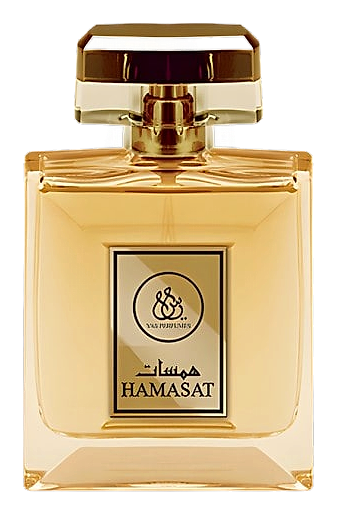
Hamasat, the name itself means "whisper", was launched by YAS in 2015. The intent was clear: a fragrance with enough complexity to reward close attention, a composition where the layers reveal themselves gradually rather than announce themselves immediately. The structure holds together through an unusual balance of elements, each note finding its place without crowding the next. It's a scent that invites discovery rather than demands it, built for the wearer who values depth over declaration.
What makes Hamasat unusual in the regional canon is its structural honesty. Where many Middle Eastern fragrances layer sweetness over density until the whole thing blurs, this one keeps its elements visible. The vinyl note, rarely deployed at this prominence, acts as a binding agent between the powdery rose and the woody base. It doesn't disappear into the composition. It holds the composition together. The result is something that reads almost Western in its restraint, almost Eastern in its warmth, fully neither.
The evolution
The opening arrives quietly, a brief flash of chili warmth, then milk and rose powder take over. No grand entrance. For the first twenty minutes, it reads almost floral. Then the cedar emerges, followed by oud that stays fine-cut rather than dense, and the vinyl becomes apparent as a sheen rather than a statement. By hour three, the heart settles into a warm, slightly metallic powder, the kind that clings to skin rather than fills a room. Through the mid-stage, the composition maintains its close presence, with the cedar and musk providing a gentle foundation that carries the remaining facets through their final hours on the skin.
Cultural impact
Gulf-based houses like YAS have been expanding beyond traditional bakhoor and oud into compositions that sit alongside European releases. The approach reflects an interest in creating scents with nuanced oriental characters that explore combinations beyond the predictable. YAS The Royal Name of Perfumes maintains a catalog that spans multiple fragrance traditions, with Hamasat representing a particular direction in that range. The powdery rose and milk accord echoes elements found in classical Arabic perfume traditions while the vinyl note appears as an unusual choice in this context.