The Story
Why it exists.
The beginning
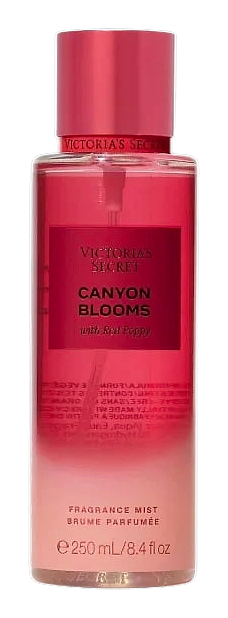
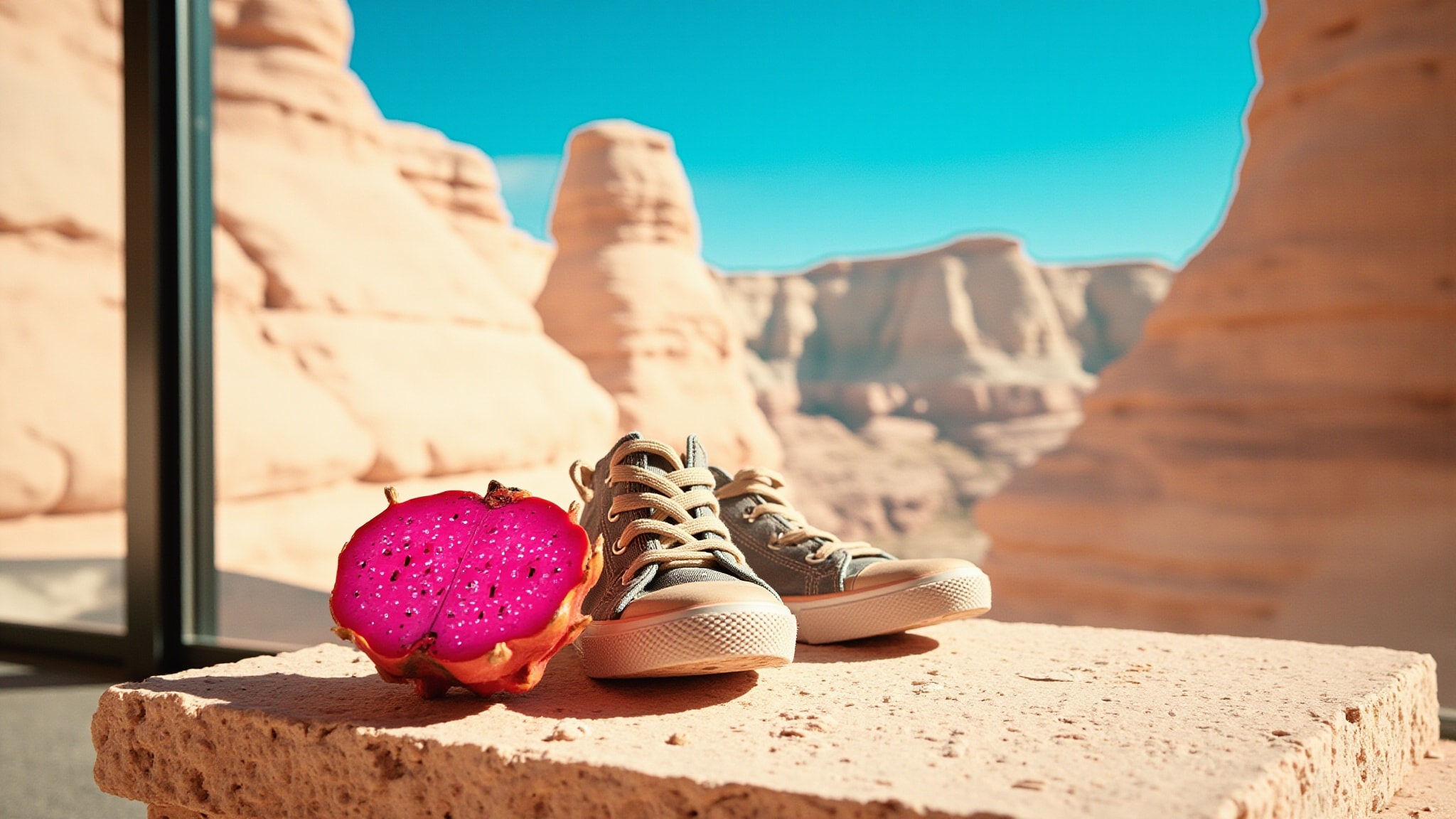
Canyon Blooms arrived in 2026 from Victoria's Secret, a fragrance built around a sensory paradox: the desert in bloom. Parched ground meeting sudden succulence, the fleeting floral pulse that follows rare rain, the contradiction of softness arriving in a place defined by aridity. The name itself does the work. Canyon speaks to mineral heat, to stone walls holding warmth long past sundown, to the geology of baked earth and cooling shadow. Blooms speaks to what interrupts that aridity, a riot of color that doesn't belong and somehow does, petals opening in soil that should not support them. This is a composition that treats fragrance as landscape, asking the wearer to register terrain as much as scent, to feel the temperature of the place before naming what grows there.
What's structurally unusual here is the source of coolness. Cactus water sits at the top of the pyramid, carrying a clean, almost mineral quality, a wetness without rain, a quench that reads geological rather than meteorological. Paired with pear, the opening becomes crisp but not sharp, watery but not ozonic, the fruit amplifying the green freshness rather than adding sweetness. Then the heart introduces driftwood and sand, and the composition pivots toward the ground itself. Red poppy enters as the only true floral color, a papery warmth that reads desert-bright rather than garden-soft.
The evolution
The opening minutes belong to coolness and clarity. Pear and cactus water arrive together, with a faint sweetness that's more suggestion than statement. There's a watery transparency here that surprises in a composition so grounded otherwise, a moment of altitude before the descent into warmer territory. As the hours pass, the drydown begins its pivot. The pear doesn't so much fade as get absorbed, replaced by the mineral hum of sand accord and the salt-bleached quality of driftwood. Air accord does strange work in this phase, lifting the composition so it breathes rather than clings, carrying the woodiness outward instead of letting it sit heavy on skin. Red poppy enters during the transition, bringing a warmth that's almost solar, dry rather than powdery, its petals reading more like stained glass than tissue paper. The later drydown is where Canyon Blooms earns its staying power.
Cultural impact
Canyon Blooms entered a fragrance conversation that had grown increasingly interested in scents built around texture and place rather than pure sweetness. Its prickly pear and cactus water pairing offered something different from the gourmand and floral compositions that tend to dominate the American market: a composition with structural coolness, a mineral edge, and an association with landscape rather than dessert. The juice reads less like a perfume meant to evoke an object and more like one meant to evoke a location, a stretch of land where heat and hydration coexist in fragile balance.