
The Story
Why it exists.
The beginning
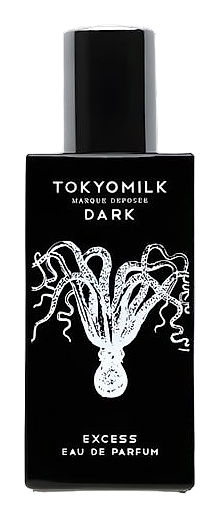
Excess is Tokyo Milk's answer to a question nobody else was asking: what happens when you let the dark win? Margot Elena designed this fragrance to explore the boundaries between brightness and depth. Blood orange opens the composition like a flash of light across dark water, but it's not here to stay. The patchouli and oak bark underneath are what Excess is really made of. Amber resin binds everything together, warm and slow, so that when the blood orange finally fades, you're left with something that feels like it was always meant to be there. The dry-Down deepens into something almost medicinal, a resinous earthiness that lingers on skin for hours. This is not a fragrance that hedges. It commits, fully and without apology, pulling you deeper into its shadows with each passing hour.
The four notes in Excess are deceptively simple on paper. Blood orange, patchouli, oak bark, amber resin. But the way they interact is what makes this composition work. Blood orange opens bright and almost too sharp, a citrus note that announces itself without apology. Then patchouli and oak bark arrive together, earthy and resinous, with a woodiness that feels damp rather than dry. The amber doesn't sweeten so much as warm, adding a resinous depth that holds everything in place. The result is a fragrance that feels darker than its individual notes suggest. It's not the patchouli alone, it's the contrast between the bright citrus opening and the deep, earthy base that defines Excess.
The evolution
Blood orange arrives first, all citrus and flash. You get thirty minutes of something bright before the patchouli and oak bark move in and settle everything down. The transition isn't gradual, it's a hand-off. One note leaves, the other takes over. Patchouli and oak bark dominate the heart, earthy and resinous, with a woodiness that leans damp rather than dry. Amber holds everything together, warm and close, so that even at its most intense, Excess feels intimate rather than loud. The drydown is where this fragrance earns its name. Hours later, the oak and amber linger close to the skin, quiet and warm, the patchouli fading last. On fabric, it settles into something softer, less dark, more warm. The blood orange doesn't return. It was here to start something, not to finish it.
Cultural impact
Excess stands apart from the more conventional offerings in the Tokyo Milk catalog. The blood orange opening was a deliberate choice, a flash of brightness before the darker notes take hold. That interplay between citrus brightness and earthy depth is what makes Excess unusual in the landscape of modern perfumery. Reviewers have described it as rich and exciting, noting how the patchouli and oak bark create a foundation that feels both grounded and mysterious. The fragrance has found its audience among those who appreciate something that doesn't play by the rules, a scent that asks you to lean in rather than stand back.