The Story
Why it exists.
The beginning
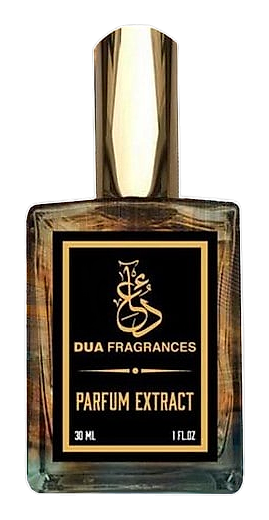
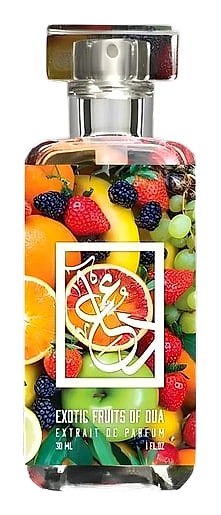
Fruity fragrances live in two worlds. Either they stay bitter, green, almost medicinal, or they tip entirely the other way, into something that smells like it belongs in a candy shop. The space between those two poles rarely gets explored, leaving a gap where something more interesting could exist. Here sits honeyed candy, loukhoum, caramel, praline, a constellation of sweet accents that don't apologize for what they are. The name says it all. Exotic Fruits. Plural. Not one star fruit, not a single mango. This is a composition built from multiple tropical inspirations, each one pulling the others forward. The sweetness isn't an accident or an afterthought. It's the point.
What makes this interesting isn't the fruits themselves, tropical blends are common enough. It's the way The Dua Brand refused to hedge. The sweetness in Exotic Fruits of Dua doesn't whisper. It announces itself in the opening and never really apologizes. The florals do the work of keeping it from becoming actual dessert. White rose and jasmine arrive alongside the fruit, not as contrast but as reinforcement, sweet florals for sweet fruit. Red rose adds a slightly deeper, more jam-like quality that rounds the heart into something that smells less like a field and more like a candied petal. Then comes the base: loukhoum, Turkish delight, the rose-water-and-starch confection, layered with caramel and praline.
The evolution
The first ten minutes smell like a fruit stand at noon, bright, dripping, almost wet. Tropical notes hit first: mango, lychee, something that reads more as a concept than a specific fruit. Honey threads underneath, not as a base yet but as a preview. The violet leaf keeps it from going completely syrupy. Green, just barely. By the second hour, the florals have taken over. Jasmine leads, creamy, almost indolic at this point, sweet the way jasmine gets when it sits in warmth. White rose follows, softer, with a slight powdery edge that already hints at what's coming. Red rose brings up the rear, slightly deeper, slightly more jam-like. The fruits are still there but they've receded, becoming atmosphere rather than announcement. Loukhoum appears here too, that rose-water-and-starch Turkish delight note, giving the heart a chewy, almost edible quality that nobody mentioned in the name but everyone recognizes on skin. The drydown belongs to the gourmand trio. Caramel. Praline. The iris powder settling over everything like a dust you almost can't see.
Cultural impact
Exotic Fruits of Dua exists for the wearer who looked at the original and thought, yes, but make it sweeter. That's not a criticism. That's an appetite, and this fragrance satisfies it completely. A composition that smells expensive, joyful, and entirely unpretentious. The kind of fragrance you wear when you want to smell like joy rather than just smell good. The florals support the sweetness rather than fight it. Rose and jasmine don't temper the fruit, they join it, creating something that reads as both dessert and garden. This isn't about restraint or balance in the traditional sense.