The Story
Why it exists.
The beginning
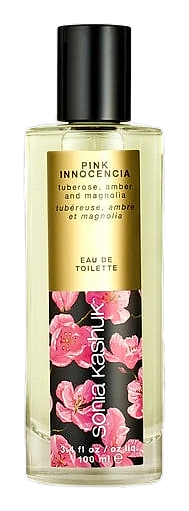
Sonia Kashuk built her brand around democratizing professional beauty techniques, making the results of editorial makeup accessible to everyday consumers through Target partnerships and department store distribution. Her fragrance collection, launched around 2010, translated this philosophy into scent: a color-coded system of five bottles where each fragrance had a companion cosmetic shade. Pink Innocencia was the opening act, the one that promised softness, sweetness, and a certain untouchable quality. Jérôme Epinette was tasked with making that promise real. The brief, if you can call it that: tuberose, magnolia, amber. Build something that smells like the color pink smells. What he delivered was a fragrance that wears its name like a question. Pink Innocencia suggests innocence. But the animalic accord in the drydown suggests something else entirely. That's the twist: it smells expensive beneath the sweetness.
The note pyramid is almost aggressively simple: three materials. Tuberose. Magnolia. Amber. On paper, it shouldn't be enough. Florals that are too literal can smell like air freshener; amber that overstays its welcome becomes a museum exhibit. But Beautylish's description hints at what makes this work, "creamy, slightly tangy" is the operative phrase. The tang is the animalic. It lives in the drydown, underneath the florals, where it shifts the composition from sweet to something with real complexity. That's the structural move here: Pink Innocencia earns its name by being innocent in the opening and more interesting in the drydown.
The evolution
The opening is tuberose making its case immediately, heady, almost overwhelming in the first spray, the kind of white floral that announces itself without apology. Magnolia arrives within the hour, softening the edges, making the tuberose less shouty and more intimate. By the second hour, the florals have settled into something creamier, the creaminess reading like actual cream, lactic, slightly sweet. Then comes the amber. Not the amber of gourmands, no vanilla, no caramel, no syrup. Just warm resin, animalic warmth, and that subtle edge that makes the whole composition smell like skin rather than product. The drydown is the argument for Pink Innocencia. It's where the name stops making sense and the fragrance starts making sense. That tangy, slightly dirty warmth, the skatole whisper that makes white florals smell human instead of synthetic, lives here. It fades slowly on most skin, staying intimate and close for the 4-6 hour arc. This is a fragrance that rewards patience. The people who love it most are the ones who got past the opening.
Cultural impact
Pink Innocencia launched in 2013, part of a five-fragrance color-coded collection that positioned fragrance as an extension of the Sonia Kashuk beauty philosophy. The line was distributed through Target and department stores, bringing the brand's professional-grade approach to a wide audience. Pink Innocencia carved out a specific territory: floral-animalic without tipping into either extreme. Wearers described it as a fragrance with hidden depth, the animalic accord in the drydown was either its most compelling feature or its most polarizing, depending on who you asked. The fragrance has since been discontinued, which has only increased its appeal among collectors and those who remember it fondly.