
The Story
Why it exists.
The beginning
Saint-Jeannet is a real place in Provence, and the fragrance takes its name from the village with a kind of deliberate literalness. Marie Aoun, the perfumer, has spoken about a personal childhood connection to the area, and the release is designed to channel that memory into scent: not a postcard view, not a Provence cliché, but the version of childhood summers that lives in the body long after the geography changes. The name stays literal. The village stays specific. Everything else, she lets the materials carry. What comes through in the composition is the sense of a place held in muscle memory rather than photographed, something closer to a feeling than a setting.
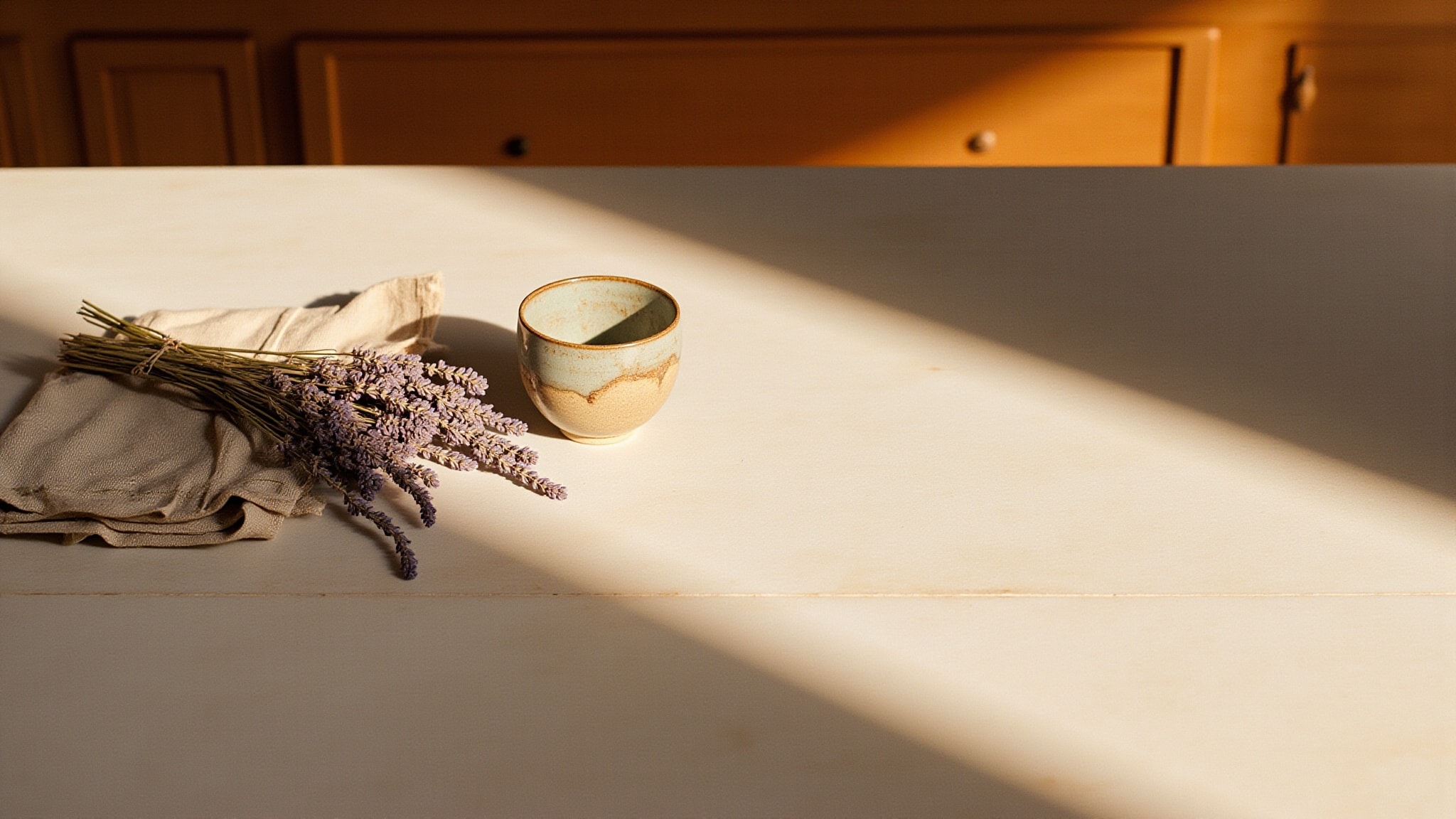
What's interesting is the restraint. The formal note list runs to four materials: tonka bean, lavender, labdanum, and cedar, with rosemary appearing in supporting text alongside them. Saint d'Ici treats the lavender differently than most compositions do, reading powdery rather than purely herbal, almost cosmetic, the way dried buds smell tucked into a cotton sachet rather than crushed between your fingers in a field. The rosemary reads resinous, with a depth that leans away from the bright, kitchen-cabinet version of the plant.
The evolution
The opening is the fastest part, where the brightest materials show their faces first. Lavender arrives with a soft sweetness, powdery rather than sharp, and the rosemary follows with its own resinous weight. Within the early minutes, the herbal sharpness softens and the powder quality emerges, the way it does in dried lavender tucked into cross-stitched pouches in cupboards, a detail Aoun has referenced herself. As the composition develops, cedar moves through the middle, dry and grounding, and labdanum starts warming underneath everything. Eventually the whole thing settles into its real shape: an amber-woody base with tonka bean's sweetness threading through it. The rosemary doesn't disappear, it just gets quieter, almost meditative. The drydown is where Saint-Jeannet stops being a place and becomes a feeling: warm skin, clean cotton, the ghost of something herbal underneath.
Cultural impact
Saint-Jeannet sits in a specific corner of the fragrance world. It takes its name from a real village in Provence and treats that place as a creative anchor rather than a marketing label. Marie Aoun has spoken about a personal childhood connection to the area, and the composition is built to channel that feeling into scent. The materials are familiar: tonka bean, lavender, labdanum, cedar, with rosemary in support. What makes it worth attention is the treatment of those materials, the way lavender reads powdery and almost cosmetic, the way rosemary leans resinous, the way labdanum and tonka settle into an amber-woody warmth.
The House
Saint d'IciSaint d’Ici is a botanical fragrance house founded by Marie Aoun and based in South Africa. The house develops small-run perfumes from plant-derived materials, with a focus on ingredients sourced mainly from across Africa. Its 2022 collection includes A Fern, Within A Budding Grove, Moussem, Magnolia, Nsika, Saint-Jeannet and Resina. These names place familiar botanical and place-based themes at the centre of the brand’s identity. Public sources differ on whether the studio is located in Johannesburg or Cape Town, although Saint d’Ici’s own current listing gives an address in De Waterkant, Cape Town. Independent profiles also identify Aoun as the founder and perfumer behind the house.
The Creator
Marie AounAoun’s signature lies in natural botanical perfumery, with a preference for ingredients sourced from around the world. Her compositions are described as private collections and sensory experiences, suggesting a focus on personal mood over a single, easily classified house style.