The Story
Why it exists.
The beginning
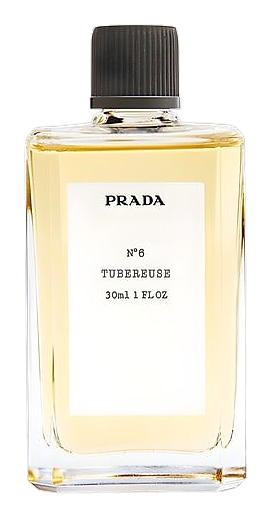
No6 Tubéreuse arrived in 2007 as part of Prada's Exclusive Collection. Daniela Andrier turned her attention to tuberose, approaching it with precision and intention. The 'No6' naming itself signals intent. This isn't a fragrance that wraps itself in narrative flourish. It's a study. A numbered specimen in a collection built around ideas rather than accessories. Andrier's brief seemed to be: what happens when you let tuberose be itself, but through a lens of restraint? The result isn't a quiet fragrance. It's a composed one. There's a difference. The tuberose doesn't announce itself with the usual creamy abundance. Instead, it arrives measured, its waxy white petals held in check by cooler elements, green, slightly metallic, almost mineral in their precision.
The unusual structure is what makes No6 Tubéreuse worth understanding. The opening leads with mate absolute and violet, an unexpected combination that produces that cool, metallic-green impression. Neroli adds a bitter-citrus edge. The effect is clinical before it's beautiful. Some reviewers call it austere. Others reach for 'prim.' Both are accurate. Then the turn. The tuberose doesn't sneak in. It arrives. Shamelessly, some wearers note. The neroli stays close, its bitter citrus threading through the cream, while mate's herbal quality keeps everything grounded and slightly bitter.
The evolution
The first minutes belong to the cool. Neroli's bitter citrus, mate's green austerity, violet's powder-sharp edge. It's green without freshness, a metallic shimmer that reads as almost clinical. The kind of opening that makes you check if you're wearing anything at all. You are. And it knows what it's doing. Within ten minutes, the hand-off begins. The green-metal notes don't disappear, they recede, becoming a frame rather than the painting. And tuberose steps forward. Not the lazy, creamy tuberose of lazier compositions. This one arrives with the neroli still present, the mate still bitter, as if it's refusing to apologize for its intensity. This is the core: the next two to three hours, when tuberose and neroli share space with mate's herbal undertone and rose's quiet cream. It's floral, yes. But it's also bitter. Also green. Also, somehow, cool. The drydown isn't a fade. It's a choice.
Cultural impact
No6 Tubéreuse occupies a particular position in the tuberose canon: compelling for those who find mainstream white florals too generous in their delivery, polarizing for those who want their tuberose to announce itself from the first spray. It's not a crowd-pleaser by design. It's a fragrance for someone who's outgrown the need to announce themselves entirely. In the context of Prada's exclusive collection, a series of numbered, conceptual studies rather than commercial releases, it represents the house's willingness to be difficult. To insist on its own terms.