
Heritage
A house, in its own words
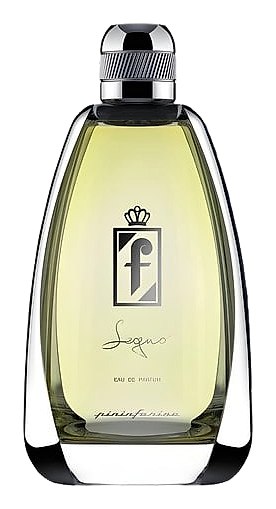
Pininfarina's fragrance story begins within a much larger Italian design heritage. The company was founded in 1930 by Battista Farina, an automotive designer from Turin whose name became part of the marque. Pininfarina built its reputation through bodywork and vehicle design, eventually working with major manufacturers including Ferrari. That automotive context gives the later perfume releases a distinct point of reference, expressed through bottle form, material impression and the suggestion of speed. The perfume house itself is recent by comparison. Fragrance database records list Segno and Lumina as the brand's two perfumes, both introduced in 2015, while Fragsi also records 2015 as the fragrance brand's founding year. Research on the perfume archive also points to a separate collaboration with Guerlain, in which the French perfume house designed a bottle inspired by luxury car design. The available material does not establish a continuous fragrance lineage from Battista Farina to Segno and Lumina. It instead shows a later extension of the Pininfarina name into fragrance, alongside an exchange with Guerlain's established house. The name Farina carries its own cultural memory within European perfumery. In Cologne, Giovanni Battista Farina founded Farina 1709 in 1709, creating the original Eau de Cologne. This is a separate Farina enterprise rather than the direct parentage of the Pininfarina fragrance label, but the surname creates a notable historical connection between Italian design and one of Europe's oldest fragrance houses. Pininfarina approaches fragrance through the discipline of industrial design. Its visual references come from automotive design, where proportion, surface, enclosure and the relationship between function and appearance shape every detail. In fragrance packaging, that means the bottle must function as an object as carefully as the composition must function on skin. The collaboration with Guerlain reinforces this approach because it places Pininfarina's design sensibility within a perfume house with documented roots in 1828. The collaboration also suggests a willingness to let design and perfumery complement rather than imitate one another. The brand's fragrance philosophy is compact and object-led. With only Segno and Lumina recorded as releases, there is no evidence here of a broad portfolio built around multiple scent families. Instead, the catalogue functions like a small collection of designed objects. Their names, which can be read as a sign and as light, reinforce the idea of fragrance as a moment of personal expression rather than a heavily elaborated lifestyle statement. The principles can be stated conservatively. Pininfarina translates automotive design into fragrance presentation, values coherent form and material detail, and places the bottle within the same field of attention as the scent. The available sources do not identify a perfumer for either release, so responsibility for the compositions cannot be assigned with confidence.