The Story
Why it exists.
The beginning
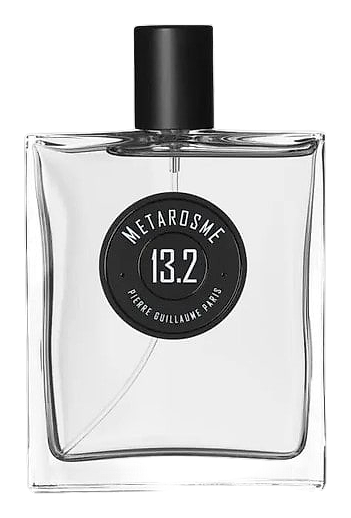
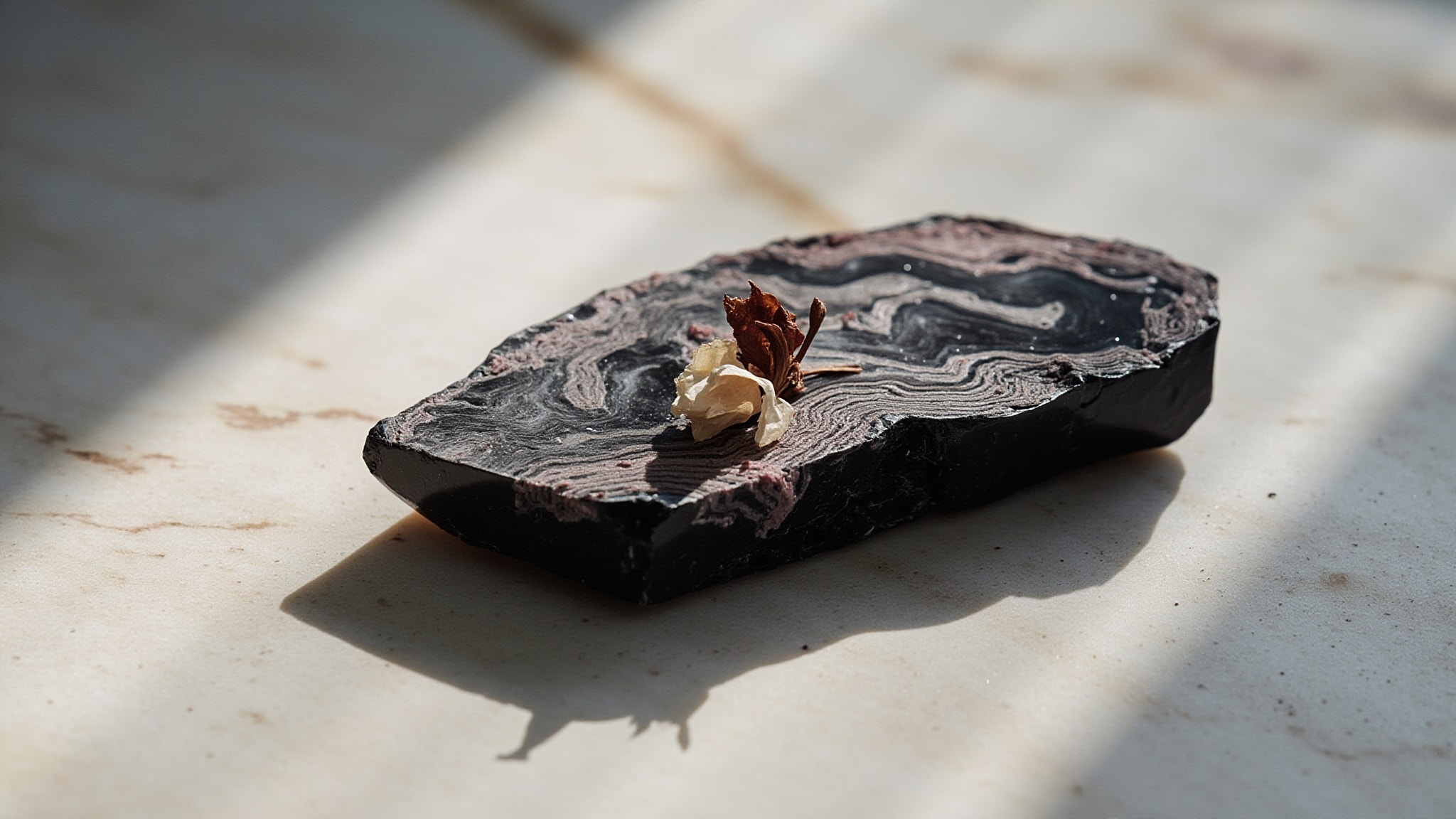
Pierre Guillaume has always treated the rose as a problem to solve rather than a note to deploy. Métarosme 13.2 began with a question: what happens when you extract the idea of rose from everything we expect it to be? The answer arrived in Volvic stone, not as a metaphor, but as a literal material. Obsidial, the house's proprietary mineral accord, captures the cool dampness of wet rock, that moment when rain has just stopped and the air smells of nothing and everything at once. Against this mineral blankness, rose loses its script entirely.
The Numéraire collection, where each fragrance carries a number rather than a story, suggests an archive, a catalog of formal experiments. 13.2 continues this lineage. The Grisalva, a balsamic-ambergris material, introduces a faint salty radiance that interacts with the mineral depth like light on water. Redwood provides structure beneath, a steady pulse that prevents the composition from floating away. The result is neither warm nor cold, neither fully floral nor fully mineral, a wave that keeps cresting without ever quite breaking.
The evolution
The opening hits cool and green, a mineral spark, like struck flint meeting wet earth. The rose doesn't arrive so much as coalesce, stripped of its usual softness, held in place by the mineral accord rather than floating above it. Redwood establishes itself early as a quiet structural element, never showy. The Grisalva reveals itself gradually, adding a balsamic lift that feels almost aquatic, the salty residue left on skin after swimming in the ocean. Hours in, the drydown settles into a long mineral-woody residue, the kind that stays close to the skin and rewards proximity rather than announcement. On fabric, the mineral quality lingers longest; on skin, the rose finds more room to breathe.
Cultural impact
Métarosme 13.2 arrived during Pierre Guillaume Paris's ongoing mission to treat perfume as conceptual art rather than mere fragrance. The mineral-rose combination was radical when it launched, challenging traditional rose-perfume conventions by stripping away romance and sweetness in favor of industrial, mineral qualities. This approach positioned the fragrance as an intellectual statement, something you wear as a deliberate choice, not an instinctive one. It contributed to the contemporary trend of conceptual perfumery that values ideas and provocation over pleasantry. The brand itself, with its numbered collections and artistic premises, operates more like a gallery than a perfume house, encouraging buyers to engage with narrative over familiarity.